
Shodh Sari-An International Multidisciplinary Journal
Vol-05, Issue-01(Jan-Mar 2026)
An International scholarly/ academic journal, peer-reviewed/ refereed journal, ISSN : 2959-1376
Kum Dye in Manipur: Safeguarding Cultural Heritage and Traditional Practices to Ensure Sustainable Revitalisation
Singh, Naorem Ingochouba1, Meitei, Akoijam Pete2
1Assistant Professor, Ibotombi Institute of Education, Canchipur, Manipur, and Research Scholar, Department of Education, Dhanamanjuri University, Imphal,
2Assistant Professor, Ibotombi Institute of Education, Canchipur, Manipur and Research Scholar, Department of Education, Manipur University, Canchipur
ORCiD: 0009-0009-6705-4613
Abstract
The traditional use of Kum dye, derived from Strobilanthus flaccidifolius, has played a significant role in the textile heritage of Manipur, particularly among the Meitei community. It explores the legacy of Kum dye, highlighting its traditional extraction and dyeing methods, socio-cultural importance, and the challenges it faces due to the rise of synthetic dyes. Historically, Kum dye has been integral to the production of Kum-dyed Phanek (KDP), a formal folk dress of Meitei women, symbolizing cultural identity and social status. The dyeing process, dating back to the 11th century AD, involves fermenting leaves and young shoots, using calcined oyster shell ash (kum sunu) as a mordant, and applying it repeatedly to achieve a deep blue-black colour. Despite its deep-rooted significance, Kum dye has declined due to the increased accessibility of chemical dyes, resulting in a loss of Indigenous knowledge and a reduction in the availability of Strobilanthus flaccidifolius. However, recent revival efforts focus on sustainable cultivation, modernizing traditional techniques, and promoting eco-friendly textile industries. This article emphasizes the need to preserve Kum dye for its cultural and historical value and potential in sustainable fashion and economic development. By integrating traditional knowledge with contemporary innovations, Kum dye can be revitalized, ensuring the continuity of Manipur’s rich textile heritage while fostering environmentally responsible alternatives in the global market.
Keywords: Kum dye, Strobilanthus flaccidifolius, Manipur, traditional dyeing, cultural heritage, sustainable textiles.
About Author
Naorem Ingochouba Singh is an experienced teacher and educationist currently working as an Assistant Professor at the Ibotombi Institute of Education, Canchipur, Manipur. He has nearly 18 years of teaching experience. He holds an M.A. in Education (Gold Medallist) and a B.Ed. and has qualified for the UGC NET. His areas of expertise include curriculum development, teacher training, and implementing the National Education Policy (NEP) 2020. He has also worked as a resource person for SCERT and DIET programs in Manipur. Over the years, he has conducted action research, written case studies, and contributed to the development of educational modules and assessment frameworks.
Akoijam Pete Meitei is an accomplished educator and researcher from Manipur, India, with over a decade of experience in teaching. He holds an M.A. in Education, M.Ed., and UGC NET qualifications and is pursuing a PhD at Manipur University. He has been an assistant professor, teacher, and principal in various institutions. He actively participates in academic presentations, teacher training, and curriculum development.
Impact Statement
This study significantly contributes to the preservation and revitalization of Manipur’s indigenous knowledge systems by documenting the traditional practices, cultural importance, and ecological context of Kum dyeing. As one of the most endangered cultural crafts, Kum dyeing embodies deep historical roots, ritual significance, and community identity. By examining the decline caused by synthetic dyes, habitat loss, and erosion of traditional knowledge, the research highlights urgent conservation and revival needs. Its findings provide a foundation for sustainable strategies, including community-based cultivation of Strobilanthus flaccidifolius, modernization of dyeing methods, and policy interventions that support artisans and biodiversity protection. The study advances the field of ethnobotany, cultural heritage studies, and sustainable textile research by linking traditional ecological knowledge with contemporary sustainability goals. It also creates pathways for eco-friendly textile innovations and strengthens cultural resilience, ensuring that Kum dyeing can be revitalized for future generations.
Cite this Article:
APA 7th Style: Singh, N. I., & Meitei, A. P. (2026). Kum dye in Manipur: Safeguarding cultural heritage and traditional practices to ensure sustainable revitalisation. Shodh Sari-An International Multidisciplinary Journal, 5(01), 332–354. https://doi.org/10.59231/SARI7904
Chicago 17th Style: Singh, Naorem Ingochouba, and Akoijam Pete Meitei. “Kum Dye in Manipur: Safeguarding Cultural Heritage and Traditional Practices to Ensure Sustainable Revitalisation.” Shodh Sari-An International Multidisciplinary Journal 5, no. 1 (2026): 332–354. https://doi.org/10.59231/SARI7904.
MLA 9th Style: Singh, Naorem Ingochouba, and Akoijam Pete Meitei. “Kum Dye in Manipur: Safeguarding Cultural Heritage and Traditional Practices to Ensure Sustainable Revitalisation.” Shodh Sari-An International Multidisciplinary Journal, vol. 5, no. 1, 2026, pp. 332-354, https://doi.org/10.59231/SARI7904.
DOI: https://doi.org/10.59231/SARI7904
Subject: Cultural Heritage / Sustainable Fashion / Ethnobotany
Page No. 332-354
Received: Dec 06, 2025
Accepted: Jan 14, 2026
Published: Feb 13, 2026
Thematic Classification: Kum Dye, Manipur, Cultural Identity, Sustainable Revitalization, Meitei Community, Traditional Dyeing Practices, Strobilanthes flaccidifolius, Textile Heritage, Eco-friendly Textile Industry
Introduction
Manipur, a state in Northeast India, is well known for its rich biodiversity and cultural heritage, where various ethnic groups have traditionally practiced the art of natural dyeing using plant-based materials. Since ancient times, Meitei women from the valley and tribal women from the hills have been dyeing threads and clothes using a variety of plant leaves, flowers, and barks. Many of these dye-producing plants were cultivated in their home estates. In contrast, others were sourced from the surrounding hills, forming an essential part of the local textile traditions (Akimpou et al., 2005; Singh et al., 2009). Natural dyes have been crucial in textile production worldwide for thousands of years. Manipur’s long-standing tradition of using such dyes is no exception (Akimpou et al., 2005; Sharma, 2008). Among the many traditional dyeing techniques, Kum dyeing holds special significance, particularly in the production of Phanek Mayek Naibi, a traditional skirt worn by Meitei women. When dyed with Kum dye, this skirt is not merely a garment but a representation of cultural identity, social status, and heritage. Historical records suggest that Kum dyeing dates back to the 11th century AD, though it may have existed earlier (Mutua, 1997, 2000; Ningombam et al., 2012; Singh et al., 2009). The craft has been passed down through generations, reflecting the expertise and dedication of Meitei artisans in preserving their textile heritage.
The rich tradition of natural dyeing in Manipur is sustained by the region’s diverse flora, with more than 50 plant species including Ureirom (Bixa Orellana), Ureirom Laba (Mallotus philippensis), U-Napu (Berberis manipurana), Kusumlei (Carthamus tinctorius), U-nap (Berberis manipurana), U-ngang (Amoora spectabillis), Khujumpere (Achyranthes aspeta), Urok sumbal (Basella alba), Aprajita (Clitoria ternatea), Kombirei (Iris bakeri), Khe-U (Melanorrhoea usitata), Kuhi (Pasania pachyaphylla), Yongchak (Parkia roxyburhii), Kum (Strobilanthus flaccidifolius), Chingshu (Textona grandis), Yachubi (Melastoma malabathricum), Yaingang (Curcuma doestica), Heikru (Emblica officinalis), Heikha (Spondias magnifera), Manahi (Terminalia citrina), Sanarei (Tagetes payola), Pungdon (Psidium guajava), Lamuk (Cordia grandis), Chingthrao Angangba (Bauhinia purpurea), etc. were used as dyes right from ancient times (Sharma et al., 2005; Lunalisa et al., 2008). Among these, Kum (Strobilanthus flaccidifolius) is particularly revered for producing deep indigo and black hues, making it an essential part of Manipur’s dyeing tradition (Lunalisa et al., 2008; Singh et al., 2009).
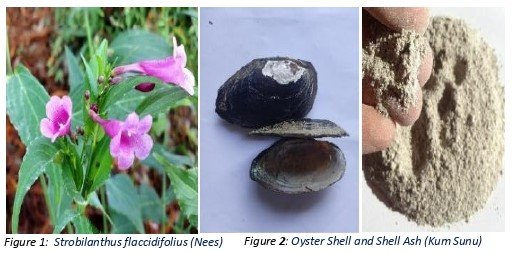
The Kum dye, derived from the leaves and young shoots of Strobilanthus flaccidifolius (Fig. 1), holds significant cultural value within the Meitei community (Devi, 2019; Ningombam et al., 2012). Its preparation involves careful fermentation of the plant material combined with calcined oyster shell ash (CaCO₃) or Kum Sunu (Fig. 2), acting as a natural mordant (Singh et al., 2009). The dye is enhanced using Pasania pachyphylla bark, banana leaf ash, molasses, mustard oil, and kuhi bark solution for better color intensity and durability. The dyeing process demands repeated dipping and air drying, yielding vibrant, long-lasting colors.
Beyond its application in textiles, Kum dye holds spiritual and ritualistic significance in Meitei society. It is believed to be blessed by Goddess Kum Lairemma, and its preparation follows strict ritualistic guidelines (Akimpou et al., 2005). A strict taboo is associated with the production of Kum dye, and any violation of this taboo was believed to result in a disease called Kumlaichuba (Mutua, 1997; Ningombam et al., 2012). Traditionally, specific clans and artisans were designated as custodians of Kum dyeing, ensuring that the craft remained within the community. Kum-dyed Phanek (KDP) was reserved for formal events, religious ceremonies, and social gatherings, reinforcing its sacred and cultural value. The institutionalization of Kum dyeing was regulated through traditional governing bodies such as Hijang Sangaisenba Loisang, Sangsaroi Loisang, and Kumsang, which played a key role in maintaining the authenticity and quality of Kum-dyed textiles (Mutua, 1997, 2000). Historical evidence suggests that the practice of Kum dyeing can be traced back to the reign of King Taothing-Mang (264–364 AD) and became more prominent under King Yanglou Keiphaba (969–984 AD), who introduced Hijam Mayek, a brightly dyed textile worn by Manipuri women. The use of plant-based dyes reached new heights during King Loyumba’s reign (1074–1122 AD) when natural dyeing became deeply integrated into Manipuri textile production, shaping a unique cultural tradition (S. Ningombam et al., 2008; Singh et al., 2009).
Despite its historical and cultural importance, Kum dyeing has declined significantly over the past century due to several factors. The introduction of synthetic dyes in 1905, followed by their widespread use in Imphal by 1930, offered a cheaper, more convenient option, leading to a loss of traditional knowledge (Akimpou et al., 2005; Kikim et al., 2015). Younger generations distanced themselves from the craft, and overharvesting of Strobilanthus flaccidifolius depleted its wild population, hindering large-scale production. Industrialization further marginalized local artisans, diminishing indigenous skills.
To revive Kum dyeing, efforts are underway to preserve it as a cultural heritage and promote it as a sustainable alternative to synthetic dyes (Ningombam et al., 2012). Researchers and organizations are documenting traditional techniques, advocating for sustainable cultivation, and incorporating modern technologies for improved durability. As eco-friendly fashion gains popularity, Kum dye offers potential as a natural and sustainable textile solution, supporting cultural preservation and environmental sustainability.
This study examines the historical significance, traditional practices, and challenges of Kum dyeing in Manipur. By analyzing historical records, indigenous knowledge systems, and conservation efforts, researchers highlight the need for sustainable innovations to protect this ancient craft. As the global textile industry embraces eco-friendly solutions, reviving traditional dyeing knowledge is crucial for sustainable fashion (Ningombam et al., 2012).
II. Review of Related Literature
The historical significance, cultural relevance, and revival efforts of Kum dye (Strobilanthus flaccidifolius) in Manipur have been the subject of several studies focusing on traditional knowledge, natural dyeing processes, and sustainability challenges. The knowledge of natural dyeing has been deeply embedded in Meitei and tribal communities of Manipur, with women artisans playing a pivotal role in preserving these techniques (Gaur, 2008). Kum dye has been historically extracted from the leaves of Strobilanthus flaccidifolius through a fermentation process, where the oxidation of plant compounds results in the characteristic deep blue-black pigment (Devi, 2019; Ningombam et al., 2012). Using Kum sunu as a natural mordant enhances colour fixation, while multiple rounds of soaking, drying, and exposure to air help intensify the dye’s depth (Devi, 2019).
Studies have documented that Kum dyeing was widely practiced in Manipur’s valley regions, particularly in Mekola, Mayang Langjing, and Thuiyang villages, where dyers followed strict seasonal cycles to optimize dye extraction (Devi, 2019; Sharma et al., 2005; Singh et al., 2009). Researchers have also noted variations in traditional dyeing techniques among different villages, depending on the availability of plant species, the quality of water, and the types of mordants used (Singh et al., 2009).
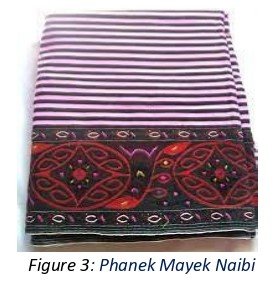
Several studies emphasize that Kum dye is not merely a textile colouring agent but a cultural artifact that embodies Manipuri heritage (City, 2023; Devi, 2019). The most well-documented application of Kum dye is in the production of Phanek Mayek Naibi (Fig. 3), a traditional garment worn by Meitei women during ceremonies, rituals, and social functions (City, 2023; Ningombam et al., 2012). Traditionally dyed with Kum, these handwoven fabrics symbolize identity, status, and cultural pride (Ningombam et al., 2012).
Anthropological research also highlights that Kum dye has been used in ritualistic contexts, with specific dyed garments and objects reserved for religious offerings, spiritual ceremonies, and specific social customs. Oral traditions suggest that dyeing with Kum was once associated with prosperity and divine blessings, reinforcing the belief that the plant should be harvested carefully and by cultural norms (Akimpou et al., 2005).
Despite its rich history and cultural significance, Kum dyeing has faced significant decline due to multiple socio-economic and environmental factors. Literature on natural dyeing industries in India points to the introduction of synthetic dyes during British colonial rule as one of the primary causes of this decline (Akimpou et al., 2005). With synthetic dyes being cheaper, more widely available, and easier to use, traditional dyeing practices began to fade, reducing the demand for labour-intensive natural dye production (Kikim et al., 2015).
Deforestation and habitat destruction have also led to the scarcity of Strobilanthus flaccidifolius, making large-scale Kum dye production increasingly difficult. Studies on biodiversity conservation in Northeast India stress that unsustainable harvesting of dye plants without proper replanting measures has accelerated the depletion of this valuable resource. Furthermore, researchers note that the lack of institutional support, market access, and financial incentives has discouraged younger generations from learning and continuing Kum dyeing traditions(Ningombam et al., 2012).
Recent literature suggests a growing interest in reviving Kum dyeing through sustainable cultivation, technological integration, and commercial incentives. Some scholars advocate for reintroducing Kum plantations in community forests, where organized harvesting and replanting programs could help restore the plant population. Research on eco-friendly textiles also highlights the potential of Kum dye in sustainable fashion, given its biodegradable nature and non-toxic properties (Devi, 2019).
Several initiatives, including government-backed craft revitalization projects and collaborations between artisans and eco-fashion designers, have sought to promote Kum-dyed textiles in local and international markets. Some studies propose educational programs and skill workshops to train young artisans in traditional Kum dyeing techniques, ensuring the knowledge is preserved and adapted for modern applications.
The existing body of literature underscores the historical, cultural, and economic importance of Kum dye in Manipur while also highlighting the challenges threatening its survival. Research has shown that Kum dyeing is a fragile yet invaluable tradition, requiring urgent conservation efforts to prevent its disappearance (Ningombam et al., 2012). By bridging traditional knowledge with sustainable practices and market-driven incentives, scholars argue that Kum dye can be revitalized as an environmentally friendly alternative to synthetic dyes, benefiting cultural preservation efforts and sustainable textile industries (Devi, 2019; Singh et al., 2009).
III. Methodology
This study employed a systematic approach to analyze existing literature and documented studies relevant to Kum dyeing. A comprehensive literature search used scholarly databases and resources specializing in ethnobotany, traditional knowledge, textile arts, and cultural studies. Targeted keywords such as “Kum dye,” “Strobilanthus flaccidifolius,” “Manipur,” “natural dyes,” “traditional dyeing,” “Meitei,” and “Phanek” were used to identify relevant sources, including journal articles, books, reports, and conference proceedings. Data extraction focused on four key areas: traditional Kum dye production methods, cultural and social significance, factors contributing to its decline, and strategies for its revival. The collected information was synthesized to identify key themes, trends, and discrepancies. A critical evaluation of existing research assessed reliability, validity, and contextual relevance, identifying gaps for further study. The findings were structured around research objectives to comprehensively understand Kum dye’s history, decline, and potential for revitalization.
IV. Objectives of the Study
To identify and document the traditional knowledge and practices associated with Kum dye production and usage.
To explore the cultural and social significance of Kum-dyed textiles.
To analyze the reasons for the decline in the use of traditional Kum dye in Manipur.
To evaluate the potential for reviving the traditional Kum dye industry and to propose viable solutions for its sustainable development and
To explore the importance of traditional ecological knowledge and biodiversity conservation.
V. Findings
Objective 1: Traditional Knowledge and Practices Associated with Kum Dye Production and Usage
The study finds that Kum dye, derived from Strobilanthus flaccidifolius, has been central to traditional textile dyeing in Manipur for centuries. The knowledge of its production has been passed down through generations, mainly among Meitei women and some tribal communities. The process involves dye extraction, fermentation, and application, reflecting an indigenous knowledge system linked to the region’s ecology and culture.
Selection and Fermentation of Raw Materials: The production of Kum dye begins with the seasonal harvesting of Strobilanthus flaccidifolius leaves to maximize dye content (Akimpou et al., 2005). The plant material is fermented in shaded areas using earthen pots (Andro chaphu) to maintain dye stability (Sharma et al., 2005). This weeks-long fermentation breaks down plant compounds, releasing indigo-producing agents, stirring by a multi-pronged wooden stick (Yakabi), and enhancing color extraction (Singh et al., 2009). Solid residues are removed, leaving a dark dye solution (Mutua, 1997). Despite its forest abundance, deforestation and unsustainable harvesting have caused plant scarcity. Spiritual replanting traditions reinforce cultural and environmental values (Ningombam et al., 2012).
Traditional Process of Kum Dye Production: The production process is labor-intensive and time-sensitive, with fermentation being central. The process involves adding alkaline agents, most importantly, “Kum-sunu” (oyster shell ash), which acts as a natural mordant to activate dye molecules (Sharma et al., 2005; Siva, 2007). Natural additives like straw, dry cow dung, Pasania pachyphylla bark, banana leaf ash, mustard oil, and molasses regulate pH, improve color fastness, and enhance dye texture. Continuous stirring ensures dye purity and optimal fabric coloration. The traditional process includes:
Fermentation and Extraction: The leaves of Strobilanthus flaccidifolius are soaked in water and left to ferment for days or weeks, depending on temperature and humidity. This process releases indoxyl compounds, which oxidize to form indigo (Singh et al., 2009). Different villages follow slightly different fermentation techniques using clay pots and wooden or metal containers.
Use of Natural Mordants: Kum Sunu is the primary mordant to enhance dye adherence. Burnt oyster shells are ground into powder, mixed with water, and heated to create a calcium-rich solution. Other mordants like Kuhi (Pasania pachyphylla) bark extract and Utti (alkaline solution from rice straw ash) are also used for color fixation and shade variations (Singh et al., 2009).
Dyeing Process and Colour Development: The fabric or yarn is immersed multiple times in the dye bath, allowing oxidation to develop a deep blue-black colour. Findings suggest that Kum dye offers shades ranging from light blue to deep black depending on the number of dyeing cycles and mordants used. Artisans also use plant-based additives, like ashes from Achyranthes aspera leaves to modify pH levels and improve colour fastness.
Division of Labor and Social Structure: Kum dye production was historically a specialized craft with different roles for fermenters, dyers, and weavers (Mutua, 1997). Specific clans were designated as dye artisans to maintain consistent quality across generations. This division of labor was embedded in the Meitei social structure, with institutions like Hijang Sangaisenba Loisang, Sangsaroi Loisang, and Kumsang regulating dyeing practices (Mutua, 1997; Singh et al., 2009). Kum dyeing was institutionalized in the 11th century AD by King Loyumba, who assigned specific families the role of producing natural dyes. Strobilanthus cusia leaves and Kum-dyed textiles were also historically offered as tribute to Meitei kings by various ethnic groups (Ningombam et al., 2012).
Usage of Kum Dye in Manipuri Culture:
Textile Dyeing and Traditional Clothing: Findings reveal that Kum dye has been mainly used for dyeing Phanek Mayek Naibi, a formal and ritualistic attire for Meitei women. Kum-dyed textiles were once reserved for high-status individuals. The dyeing of Khamen Chatpa (royal patterned textiles) with Kum was historically associated with Manipuri royalty and spiritual leaders.
Ritualistic and Spiritual Uses: Beyond textiles, Kum dye was used for ritual ceremonies, household decorations, and religious offerings. Kum-dyed fabrics were believed to have protective qualities.
Economic and Trade Significance: Kum dye was traded locally and across neighboring regions. Small-scale industries were built around Kum dyeing. The advent of synthetic dyes led to the decline of commercial Kum dyeing.
Objective 2: Cultural and Social Significance of Kum-Dyed Textiles
Kum dye is more than a coloring agent; it is deeply connected to cultural identity, social customs, and spiritual beliefs, symbolizing identity, status, spirituality, and tradition symbolizing identity, status, spirituality, and tradition in Manipur (Ningombam et al., 2012). Kum-dyed textiles, particularly Phanek Mayek Naibi, symbolize identity, status, spirituality, and tradition. They are essential in ceremonies, religious offerings, and economic transactions.
Kum-Dyed Textiles as Markers of Identity and Status: Kum-dyed textiles serve as an identity marker among Meitei women. The Phanek Mayek Naibi is associated with dignity and social prestige and is worn for formal events, community gatherings, and religious rituals. Historically, royalty and noblewomen wore Kum-dyed fabrics as a sign of status. Specific shades of Kum dye distinguished the rank and function of some clans and priestesses within the community. The deep blue-black hue was seen as a symbol of purity, resilience, and cultural pride. Meitei men also used Kum-dyed textiles during ritualistic and formal occasions.
Ritualistic and Spiritual Importance of Kum-Dyed Textiles: Kum dye has significant ritual and spiritual value in Manipuri religious practices. Kum-dyed cloths are used in religious offerings, prayer rituals, and ceremonies related to birth, marriage, and death. The phanek is mandatory attire for women during formal events and is a visual representation of Meitei women’s identity. Priests and priestesses wear Kum-dyed garments during ritual performances for their protective spiritual qualities. Kum-dyed shawls and drapes are offered to deities in shrines. During funeral rites, Kum-dyed fabrics are used to wrap sacred items.
The study further reveals that Kum dye holds deep religious and cultural significance in Meitei society, with strict taboos governing its use. Women undergoing ritual purification after childbirth or mourning are prohibited from wearing Kum-dyed fabrics until completing purification rites (Akimpou et al., 2005). Different phanek types are linked to specific occasions, with phanek mayeknaiba, exclusively dyed with Kum, worn by older women during celebrations of happiness and well-being (Ningombam et al., 2012). Meitei spiritual beliefs attribute Kum dyeing to the blessings of goddess Kum Lairemma, making it a sacred practice (Singh et al., 2009). Violating taboos in dye preparation is believed to result in Kumlaichuba, a divine punishment (Mutua, 2000). These ritual restrictions and sacred associations ensure that Kum dyeing is treated with reverence, preserving its spiritual and cultural significance across generations.
Kum Dye in Traditional Festivals and Celebrations: Kum-dyed textiles are featured in Manipuri festivals and celebrations. During Cheiraoba (Manipuri New Year), Kum-dyed textiles are worn as a sign of new beginnings. In Lai Haraoba (a festival dedicated to ancestral deities), participants often wear Kum-dyed costumes to emphasize their connection to indigenous heritage. Kum dye is also used in wedding ceremonies, symbolizing strength, longevity, and prosperity. These findings indicate that Kum dye remains deeply embedded in Manipuri cultural traditions, ensuring its relevance in modern ceremonial practices.
Socio-economic Role of Kum-Dyed Textiles: Apart from its cultural significance, Kum dye was once a thriving cottage industry, with artisans producing hand-dyed textiles for local consumption and trade. Kum-dyed textiles were exchanged in barter systems. Women primarily carried out the dyeing process, allowing them to gain financial independence by selling Kum-dyed fabric in markets. However, the rise of synthetic dyes reduced the demand for traditionally dyed garments. Strobilanthus flaccidifolius was used as a tribute to Meitei kings, underscoring the economic and political importance of Kum dyeing (Singh, 2003).
Unique Qualities of Kum-Dyed Textiles: Kum-dyed textiles, particularly Kum-dyed Phanek (KDP), are highly valued for their unique qualities that distinguish them from synthetic alternatives (Sharma et al., 2005). The deep bluish-black hue, achieved through multiple dyeing and air-drying cycles, symbolizes authenticity (Singh, 2003). Unlike synthetic textiles, these fabrics develop a natural luster that is enhanced with washing (Akimpou et al., 2005). Additionally, their distinctive fragrance increases desirability, prompting producers to infuse chemically dyed fabrics with Kum leaves to imitate this scent and mislead buyers (Singh et al., 2009). Offering comfort, flexibility, and durability, Kum-dyed textiles remain culturally and economically significant in Meitei traditions (Ningombam et al., 2012).
Kum-Dyed Textiles in Rituals and Heirlooms: Kum-dyed textiles are treasured cultural artifacts, often passed down as family heirlooms, symbolizing emotional and historical connections (Sharma et al., 2005). Unlike modern disposable fashion, their preservation reflects a commitment to heritage, sustainability, and craftsmanship (Singh et al., 2009). Traditionally, dyed phaneks are worn during weddings, religious festivals, and ceremonies, expressing cultural pride (Akimpou et al., 2005). While younger generations value their cultural significance, older generations appreciate their superior quality and craftsmanship (Ningombam et al., 2012). Embodying identity, status, and spirituality, Kum-dyed textiles face modern challenges, necessitating revival efforts to preserve this historic craft for future generations.
Objective 3: Analysis of the Decline in the Use of Traditional Kum Dye in Manipur
Despite its historical, cultural, and economic significance, Kum dyeing in Manipur has sharply declined. Once a thriving industry, it is a fading tradition due to factors such as the rise of synthetic dyes, loss of traditional knowledge, economic challenges, scarcity of raw materials, and the limitations of traditional methods (Singh et al., 2009). This study highlights key reasons for its decline, including environmental degradation and the lack of institutional support, underscoring the urgent need for revival efforts.
The Rise of Synthetic Dyes and Market Competition: One of the primary reasons for the decline of traditional Kum dye is the introduction of chemical dyes in the mid-20th century, which provided a cheaper, faster, and more efficient alternative to traditional plant-based dyes. Synthetic dyes are more accessible and convenient. Technological advancements and exposure to global markets made modern dyeing techniques more attractive (Ningombam et al., 2012). Commercializing chemical dyes in the 19th century, particularly during British colonial rule, led to the displacement of natural dyes. Synthetic dyes offer a wider range of colours, while Kum dye primarily offers deep blue-black hues. Chemical dyes require less labour and processing time. Consumer preferences shifted toward synthetic fabrics, which provided more durability and resistance to fading. As a result, many artisans abandoned natural dyeing for cost-effective synthetic alternatives (Sharma et al., 2005).
Environmental Degradation and Scarcity of Strobilanthus flaccidifolius: Deforestation and habitat destruction have caused a decline in wild Kum plants. Unregulated harvesting of Strobilanthus flaccidifolius has led to a shortage of raw materials. Climate change and soil degradation have reduced the yield and dye potency of Kum plants. Due to these ecological constraints, Kum dyeing is no longer a sustainable livelihood for many artisans.
Loss of Traditional Knowledge and Lack of Skilled Artisans: Another major factor contributing to the decline of Kum dyeing is the erosion of indigenous knowledge. Traditionally, specialized artisans known as “Kum-subis” passed down complex dyeing techniques through generations (Mutua, 1997). However, the dominance of synthetic dyes has diminished younger generations’ interest in learning these labor-intensive methods (Singh et al., 2009). The lack of formal documentation and training programs further threatens the craft’s survival (Sharma et al., 2005). Urban migration and modern education have led to fewer practicing artisans, while chemical dyes allow weavers to dye threads independently, reducing the need for Kum dyers (Akimpou et al., 2005). Immediate documentation and teaching efforts are crucial to preserve this heritage
Economic Constraints and Changing Consumer Preferences: Kum dye production is expensive and requires specialized skills and extensive labor. Artisans struggle to compete with the mass production of synthetic-dyed textiles. The demand for Kum-dyed textiles has decreased as modern consumers prioritize affordability over traditional authenticity. Economic hardships have forced many artisans to seek alternative employment.
Lack of Institutional Support and Government Initiatives: Findings reveal that few government-led initiatives focused on reviving natural dyeing traditions. Funding for sustainable dyeing projects is scarce. Manipur has not effectively integrated Kum dyeing into larger textile or tourism industries. The lack of organized cooperatives has further weakened the Kum dye industry.
Objective 4: Evaluating the Potential for Reviving the Traditional Kum Dye Industry and Proposing Viable Solutions for Sustainable Development
The revival of Kum dyeing is possible through sustainable cultivation, technological innovations, financial support, and market expansion. The global demand for eco-friendly textiles presents an opportunity for Kum dye.
Growing Global Demand for Sustainable and Natural Dyes: The international textile market is shifting toward eco-friendly products. Natural dyes are gaining popularity due to concerns over synthetic dyes’ environmental and health hazards. Consumers are willing to pay a premium for organic, hand-dyed fabrics. Kum dye could be integrated into global eco-fashion brands.
Sustainable Cultivation of Strobilanthus flaccidifolius: Findings highlight that Reviving Kum dye production requires sustainable cultivation of Strobilanthus flaccidifolius. Overharvesting, deforestation, and pollution have severely depleted wild Kum plants, driving costs and threatening natural dye production (Akimpou et al., 2005; Sharma et al., 2005). Researchers recommend community-based agroforestry projects where farmers grow Kum alongside other crops. Support from government and NGOs can facilitate reforestation and ensure a steady supply of raw materials. Establishing Kum plantations in protected areas can reduce dependence on wild resources and promote environmental sustainability.
Technological Innovations for Enhancing Dye Production: Modernizing traditional Kum dye production could improve efficiency and durability. Controlled fermentation techniques and standardized extraction methods can enhance colour consistency and quality. Advancements in mordanting techniques and collaboration with scientists could improve dyeing processes.
Economic Support and Policy Initiatives: Financial and policy support from the government, NGOs, and private enterprises is necessary. Subsidies and grants should be given to Kum cultivators and artisans. Establishing cooperative societies or artisan collectives to provide financial assistance, skill training, and marketing support is needed. Incorporating Kum dye into Manipur’s handicrafts and textile policies and introducing Kum dyeing in vocational training programs can support the industry.
Strengthening Market Linkages and Branding Kum Dye as a Cultural Heritage Product: Kum dye can be marketed as an exclusive heritage craft. Collaborations with fashion designers and international brands could bring Kum-dyed products to premium markets. Organizing exhibitions and digital marketing campaigns can boost sales.
Community Involvement and Ethical Business Models: It has been found that reviving the Kum dye industry should be a community-driven effort. Women’s self-help groups (SHGs) and cooperative societies could lead in Kum dye production. Implementing Fair Trade certification can ensure ethical wages and working conditions. Eco-tourism initiatives can generate additional revenue. By prioritizing community participation and ethical trade practices, Kum dyeing can be revived as a sustainable, socially responsible industry.
Lack of Systematic Documentation and Preservation Efforts: The decline of Kum dyeing stems from a lack of documentation, education, and government support (Singh et al., 2009; Siva, 2007). Artisans struggle to sustain their craft without formal records or policies, while modern alternatives accelerate its disappearance (Akimpou et al., 2005). However, revival is possible through sustainable practices, technological innovation, and market expansion. Eco-friendly cultivation, modern techniques, financial incentives, and global branding could restore Kum dyeing’s cultural and economic significance.
Objective 5: Exploring the Importance of Traditional Ecological Knowledge and Biodiversity Conservation
The revival of the Kum dye industry in Manipur holds great potential due to the growing global demand for natural dyes, cultural significance, and environmental benefits (Siva, 2007). The unique qualities of Kum-dyed textiles and efforts to preserve Meitei heritage provide a strong foundation for restoration (Ningombam et al., 2012). However, challenges such as limited raw materials, labour-intensive production, declining traditional knowledge, and competition from synthetic dyes persist (Singh et al., 2009). Sustainable revival requires biodiversity conservation, modern innovations, skill development, and commercialization strategies to ensure the long-term survival of Kum dyeing traditions (Akimpou et al., 2005).
Indigenous Knowledge and Sustainable Harvesting of Strobilanthus flaccidifolius: Meitei artisans possess extensive knowledge of the ecological requirements and sustainable harvesting techniques for Kum dye production. They understand the plant’s growth cycle, identifying the best seasons for harvesting. They traditionally replicate after harvesting and follow taboos and cultural beliefs promoting environmental stewardship.
Role of Sacred Groves and Community Forests in Conservation: The study finds that sacred groves and community-managed forests have historically served as natural reserves for plants like Strobilanthus flaccidifolius. Community-based conservation models have contributed to biodiversity preservation. Findings suggest that reviving these community-led conservation strategies could be crucial to restoring Kum dye production.
The Ecological Benefits of Natural Dyes Over Synthetic Alternatives: The study indicated that synthetic dyes in the textile industry pollute water, releasing toxic chemicals. Kum dye is biodegradable and non-toxic, making it a sustainable alternative (Lellis et al., 2019). In contrast, traditional Kum mordants are organic and environmentally safe, unlike chemical mordants.
The Threats of Biodiversity Loss and the Need for Conservation Efforts: Biodiversity loss in Manipur impacts Kum dye production, as Strobilanthus flaccidifolius faces habitat destruction and climate change threats. Overharvesting has led to a scarcity of dye plants. Shifting land use patterns and deforestation have encroached on natural habitats.
Proposed Strategies for Ecological Conservation and Kum Dye Revival: Findings suggest revitalizing Kum dye production should go hand in hand with biodiversity conservation. Key recommendations include:
Sustainable cultivation of Strobilanthus flaccidifolius in community-run agroforestry projects to ensure a continuous supply of raw materials.
Government and NGO involvement in creating biodiversity reserves where dye plants can grow undisturbed.
Integrate into the educational curriculum to ensure their awareness, preservation, and accessibility for the future.
Establishing training programs for farmers and artisans on sustainable harvesting techniques ensures that Kum dyeing remains eco-friendly.
Promoting eco-tourism and cultural heritage sites focused on traditional dyeing techniques, raising awareness about the importance of natural dyes and conservation.
Encouraging scientific research on plant-based dyes to develop innovative applications for Kum dye, making it more appealing to modern sustainable textile industries.
Educational programs and apprenticeships to train a new generation of artisans.
Financial incentives and market promotion to increase consumer demand for Kum-dyed textiles.
Government-led initiatives and policy support to revitalize traditional dyeing industries.
Integrating modern technologies to hasten the Kum production process and improve the quality and quantity, aiming to make it more competitive with synthetic dyes.
Systematically record and preserve traditional methods of Kum dye extraction, application, and cultural significance.
Explore biotechnological innovations, such as microbial enzyme technology and methods to speed up fermentation.
Involve local communities, especially artisans, in revival efforts. Support Kum growers, fermenters, dyers, and weavers. Provide training and skill development for younger generations to ensure knowledge transmission.
Develop strong brands that emphasize cultural heritage, eco-friendliness, and health benefits. Highlight natural origins, traditional knowledge, and sustainable production.
Conduct further research to improve colour fastness and reduce thread brittleness. Explore the chemical properties of natural dyes and other applications, such as biological staining.
Develop value-added products such as naturally dyed fabrics, handicrafts, and cosmetics to enhance economic value.
Raise awareness about natural dyes’ environmental and health benefits among consumers and producers.
Foster collaborations between research institutions, government agencies, NGOs, and local communities for a holistic approach to revitalization.
VI. Conclusion
The legacy of Kum dye in Manipur represents a rich tapestry of traditional practices, cultural significance, and ecological interdependence. The decline of this traditional craft due to the advent of chemical dyes and socio-economic factors highlights the fragility of traditional knowledge and biodiversity. However, the growing interest in natural dyes and sustainable practices provides an opportunity to revive the Kum dye industry. By implementing strategies that promote sustainable cultivation, support local artisans, document traditional knowledge, and integrate the industry into national economic strategy, it is possible to revive this unique cultural heritage and generate significant benefits for both the community and the environment. The revival of Kum dye making and KDP has the potential to strengthen cultural identity, provide economic opportunities, and foster sustainable development in Manipur. It is imperative to prioritize documenting and preserving this valuable indigenous knowledge for future generations. This research lays the foundation for a modern venture. Considering the commercial demand, it is high time for the revival of KD and the conservation of kum plants.
Statements & Declarations
Review Method: This article underwent a double-blind peer-review process by independent experts in Cultural Heritage and Sustainable Development to evaluate the preservation of indigenous knowledge and the pedagogical implications of traditional practices in Manipur.
Competing Interests: The authors Naorem Ingochouba Singh and Akoijam Pete Meitei declare that they have no financial, personal, or professional conflicts of interest that could have inappropriately influenced the research findings or the interpretation of the cultural data presented.
Funding: This research was conducted through the academic support of the Ibotombi Institute of Education, Canchipur, and the respective Departments of Education at Dhanamanjuri University and Manipur University. No specific external grants were received for this study.
Data Availability: The analysis is based on ethnographic study, field observations of traditional dyeing practices, and cultural documentation within Manipur. All primary and secondary sources are referenced within the manuscript.
License: Kum Dye in Manipur: Safeguarding Cultural Heritage and Traditional Practices to Ensure Sustainable Revitalisation © 2026 by Singh, N.I., & Meitei, A.P. is licensed under CC BY-NC-ND 4.0. This work is published by the International Council for Education Research and Training (ICERT).
Ethics Approval: The study involved documentation of traditional community knowledge; informed consent was obtained from practitioners, and the research design adhered to the ethical standards for social and cultural research, ensuring respect for indigenous intellectual property
References
Akimpou, G., Rongmei, K., & Yadava, P. (2005). Traditional dye yielding plants of Manipur, North East India. Indian Journal of Traditional Knowledge, 4(1), 33–38. http://nopr.niscair.res.in/handle/123456789/8502
City, T. (2023, June 14). Meetei Kum (Strobilanthes flaccidifolius): A cash crop alternate for poppy (Papaver somniferum). Imphal Reviews. https://imphalreviews.in/meetei-kum-strobilanthes-flaccidifolius-a-cash-crop-alternate-for-poppy-papaver-sominiferum/
Devi, Y. P. (2019). Traditional natural dyes used for dyeing fibre and fabrics of Manipur. International Journal of Research and Review, 6(1), 202–207. https://www.ijrrjournal.com/IJRR_Vol.6_Issue.1_Jan2019/IJRR0030.pdf
Gaur, R. D. (2008). Traditional dye yielding plants of Uttarakhand, India. Natural Product Radiance, 7(2), 154–165. https://nopr.niscpr.res.in/bitstream/123456789/5661/1/NPR%207(2)%20154-165.pdf
Kikim, A., Khan, M. R., & Yadava, P. S. (2015). Traditional dye yielding plants used by different communities of Manipur, North Eastern India. International Journal of Bio-resource and Stress Management, 6(5), 591–598. https://doi.org/10.5958/0976-4038.2015.00090.1
Lellis, B., Fávaro-Polonio, C. Z., Pamphile, J. A., & Polonio, J. C. (2019). Effects of textile dyes on health and the environment and bioremediation potential of living organisms. Biotechnology Research and Innovation, 3(2), 275–290. https://doi.org/10.1016/j.biori.2019.09.001
Lunalisa, P., Swapana, N., & Warjit, L. (2008). Natural dye yielding plants and indigenous knowledge of dyeing in Manipur, North East India. Indian Journal of Traditional Knowledge, 7(1), 141–147. https://nopr.niscpr.res.in/handle/123456789/590
Mutua, B. (1997). Traditional textiles of Manipur. Mutua Museum.
Mutua, B. (2000). Tribal hand woven fabrics of Manipur. Mutua Museum. https://e-pao.net/epSubPageExtractor.asp?src=manipur.Arts_and_Culture.Mutua_Bahadur_Art_Collection.Tribal_hand_woven_fabrics_of_Manipur_part_1
Ningombam, D. S., Ningthoujam, S. S., Singh, P. K., & Singh, O. B. (2012). Legacy of kum dye: A case study with the Meitei community in Manipur, Northeast India. Ethnobotany Research and Applications, 10, 561–570. https://ethnobotanyjournal.org/index.php/era/article/view/616
Ningombam, S., Laitonjam, W., & Singh, P. K. (2008). Natural dye yielding plants and indigenous knowledge of dyeing in Manipur, Northeast India. Indian Journal of Traditional Knowledge, 7(1), 141–147. https://nopr.niscpr.res.in/handle/123456789/590
Sharma, B. K. (2008). Meiteigee Machugee Manat. Library of Congress. https://archive.org/details/in.ernet.dli.2015.465065
Sharma, M., Devi, A. R., & Sharma, M. (2005). Vegetable dyes used by the Meitei community of Manipur. Indian Journal of Traditional Knowledge, 4(1), 39–46. https://nopr.niscpr.res.in/bitstream/123456789/8493/1/IJTK%204(1)%2039-46.pdf
Singh, N. R., Yaiphaba, N., David, T., Babita, R., Devi, C. B., & Rajmuhon, N. (2009). Traditional knowledge and natural dyeing system of Manipur—With special reference to kum dye. Indian Journal of Traditional Knowledge, 8(1), 84–88. https://nopr.niscpr.res.in/bitstream/123456789/2977/1/IJTK%208(1)%2084-88.pdf
Siva, R. (2007). Status of natural dyes and dye-yielding plants in India. Current Science, 92(7), 916–925. https://www.currentscience.ac.in/Volumes/92/07/0916.pdf
Parmar, M. (2024). Interdisciplinarity and Indigenous knowledge. Edumania-An International Multidisciplinary Journal, 02(03), 208–215. https://doi.org/10.59231/edumania/9068
Related Articles:
- Education for All – National Educational Policies – An overview
- Perception of Social Justice Leadership and its Impact on Student-Faculty Relationships in Southwest Nigerian Universities
- Narrative Wisdom in Indian Knowledge Systems: Ethical and Political Thought from Panchatantra to Jataka Tales
- Integrating Yoga and Frontier Technologies in STEM Education for Regenerative Sustainable Development
- Accessibility and Utilisation of Open Educational Resources in Distance Learning Centres in Oyo State, Nigeria