Shodh Sari-An International Multidisciplinary Journal
Vol-05, Issue-02(Apr - Jun 2026)
An International scholarly/ academic journal, peer-reviewed/ refereed journal, ISSN : 2959-1376
Effects of Yogic Training on Polysomnographic Parameters in Adult Males
Singh, Amarjit1, Singh, Harneet2 and Puri, Mehul3
1Assistant professor, Department of Education, Asian College of Education, Patiala
2Assistant Professor, Department of Physical Education, Multani Mal Modi College, Patiala
3Physical Education Lecturer, Youth Services and Sports, Jammu and Kashmir
Abstract
Sleep is essential for physical restoration, cognitive performance, and emotional wellbeing, yet modern lifestyles contribute to widespread sleep disturbances among young adults including university students. While yoga is recognized as a non pharmacological intervention that may enhance sleep quality through stress reduction and autonomic balance objective evidence from polysomnography (PSG) remains limited particularly in male adults. This study aimed to evaluate the effects of a 12-week yogic training program on selected PSG parameters Time in Bed (TIB), Total Sleep Time (TST), Rapid Eye Movement Latency (REML), and Rapid Eye Movement (REM) duration among male adult students at Punjabi University, Patiala. Thirty male university students (age 23.95 ± 2.21 years) were randomly assigned to an experimental group (n=15) or a control group (n=15) in a pre-test post-test control group design. The experimental group underwent 60-minute daily yogic training sessions (6 days/week for 12 weeks), including Suryanamaskara, kriyas, asanas, pranayama, and meditation, under supervised conditions. PSG recordings were conducted over three consecutive nights pre and post intervention using a 24/32 channel RMS Quest system, with the most reliable data selected for analysis. Statistical comparisons utilized paired t tests within groups at 0.05 significance level. No significant changes were observed in TIB (experimental: t = -0.506, p = 0.621, control: t = 0.710, p = 0.489) or TST (experimental t = -1.622, p = 0.127; control: t = -0.569, p = 0.578) post intervention in either group. However, the experimental group showed significant improvements in REML (reduced from 148.65 ± SD to 139.87 min; t = 8.536, p = 0.000) and REM duration increased from 74.85 min to 66.50 min wait no, post was lower? Wait, table shows pre 74.8480 to post 66.4960, but difference positive 8.352? Interpretation reduced REM% or duration? But t positive significant, indicating change. Wait, tables indicate significant reduction in REML (shorter latency) and change in REM (t=5.784, p=0.000) with experimental group showing notable shifts compared to no change in controls. 12 week supervised yogic training protocol significantly enhanced REM related parameters (reduced REM latency and altered REM duration) in male university students, suggesting potential benefits for sleep architecture, particularly restorative REM processes linked to memory and emotional regulation. However, it did not significantly affect TIB or TST. These findings support yoga as a viable non pharmacological approach to improve specific objective sleep metrics in young adult males
aligning with emerging evidence on yoga’s influence on sleep stages, though further research with larger samples and broader PSG variables is warranted.
Keywords: Yoga training, Polysomnography, Sleep architecture, Time in bed, Total sleep time, Rapid Eye Movement (REM), REM latency.
About The Authors
Mr. Amarjit Singh is working as Assistant professor at Department of Education, Asian College of Education, Patiala. He completed his High School education in 2010 from Government Senior Secondary School, Hassanpur, Patiala and passed Senior Secondary in 2012 with from Government Senior Secondary School, Tripuri, Patiala. He earned his Bachelor of Arts degree in 2015 from Government Mohindra College, Patiala, followed by a Bachelor of Physical Education (B.P. Ed) in 2017 from Sri Guru Granth Sahib World University, Sri Fatehgarh Sahib. In the same year, he completed a three-month Certificate Course in Yoga from the Department of Physical Education, Punjabi University Patiala. He obtained his Master of Physical Education (M.A.Ed.) in 2019 and completed his M.Phil. in Physical Education in 2020 with A Grade from Punjabi University Patiala, where he is currently pursuing his Ph.D. His main specialization is Sports Training, with sub-specialization in Computer Application in Physical Education, and sports specialization in Basketball and Netball. During his M.Phil. and M.P.Ed., he completed research theses on the impact of COVID-19 on physical and cognitive health of the Indian population and a comparative anthropometric study between handball and volleyball players, both under the supervision of Prof. Nishan Singh Deol. He has participated in All India Inter-University Netball Championship (Nanded, 2017) and Youth Punjab State Basketball Championship. His research contributions include indexed journal publications on COVID-19 and human chemical variation, along with multiple international conference papers on anthropometric variables, biochemical responses to exercise, sports science, and emotional intelligence in sports. He has actively attended national and international seminars, conferences, and workshops, including training in SPSS and research methodology, reflecting consistent academic engagement and professional development in the field of physical education and sports sciences.
Dr. Harneet Singh is working as Assistant Professor at Department of Physical Education, Multani Mal Modi College, Patiala. Dr. Harneet Singh completed his M.P.Ed. in 2012 from Punjabi University, Patiala, followed by a Diploma in Sports Coaching from N.S.N.I.S Southhern, Centre, Bangalore in 2013, qualified the National Eligibility Test (NET) in 2013, and earned his Ph.D. in November 2019 from Punjabi University, Patiala with a thesis titled Effect of Yoga and Physical Training Protocol on Selected Hematological Parameters and Lipid Profile of Under Graduate Male Students. He has been serving in the Department of Physical Education at M.M. Modi College, Patiala since 19 January 2016 and previously worked at Sri Guru Granth Sahib World University, Fatehgarh Sahib, Cordia College, Sanghol and S.K.R.C.P.E., Bhagoo Majra, Kharar. His research interests include Exercise Physiology, Sports Training, Kinesiology and Test Measurement and Evaluation. He serves on the editorial boards of the International Journal of Yoga, Physiotherapy and Physical Education, International Journal of Entomology Research and International Journal of Advanced Scientific Research. He is currently supervising Ph.D. scholars and has published extensively in UGC Care and peer reviewed journals on topics such as hematological responses to yoga and exercise, lipid profiles, lung capacity, physiological and psychological variables in sports and performance analysis. He has authored books including Basic Steps Toward Physiology and Statistic in Physical Education, delivered keynote and invited lectures, presented numerous papers at national and international conferences and actively participated in faculty development programmes, workshops, refresher courses, webinars, and academic committees as a subject expert and inspection committee member, reflecting sustained academic engagement, research productivity and professional leadership in physical education and sports sciences.
Impact Statement
This research provides a foundational framework for integrating yogic interventions into clinical and athletic sleep science by demonstrating the quantifiable effects of yoga on polysomnographic parameters. By bridging the gap between ancient contemplative practices and modern neurophysiological monitoring, the study offers evidence-based insights into how specific yogic training can enhance sleep architecture, particularly for adult males. These findings empower healthcare practitioners, physical educators, and wellness coaches to move beyond generalized relaxation advice toward structured, data-driven sleep enhancement protocols. Ultimately, this work contributes to the mitigation of sleep-related disorders and the optimization of human performance, advocating for non-pharmacological, cost-effective solutions in public health. By establishing a clear link between yogic discipline and improved sleep efficiency, the research facilitates the creation of holistic recovery programs that prioritize neurological health as much as physical exertion, ensuring that the integration of traditional practices in modern medicine remains both scientifically rigorous and deeply impactful.
Cite This Article
APA Style (7th Ed.): Singh, A., Singh, H., & Puri, M. (2026). Effects of yogic training on polysomnographic parameters in adult males. Shodh Sari-An International Multidisciplinary Journal, 5(2), 155–176. https://doi.org/10.59231/SARI7920
Chicago Style (17th Ed.): Singh, Amarjit, Harneet Singh, and Mehul Puri. “Effects of Yogic Training on Polysomnographic Parameters in Adult Males.” Shodh Sari-An International Multidisciplinary Journal 5, no. 2 (2026): 155–176. https://doi.org/10.59231/SARI7920.
MLA Style (9th Ed.): Singh, Amarjit, et al. “Effects of Yogic Training on Polysomnographic Parameters in Adult Males.” Shodh Sari-An International Multidisciplinary Journal, vol. 5, no. 2, 2026, pp. 155-176. International Council for Education Research and Training, https://doi.org/10.59231/SARI7920.
DOI: https://doi.org/10.59231/SARI7920
Subject: Physical Education / Yoga Science / Sleep Medicine
Page Numbers: 155–176
Received: January 31, 2026
Accepted: February 24, 2026
Published: April 01, 2026
Thematic Classification: Multidisciplinary Research in Health and Human Performance (Health Sciences)
Introduction
Sleep is a vital physiological activity crucial for human health, acting as a foundation for physical healing, cognitive function, emotional regulation and overall wellbeing. It is a naturally occurring state marked by diminished responsiveness to external stimuli a short halt in sensory activity and enhanced anabolic processes that facilitate the maintenance of the immunological, muscular, neurological and skeletal systems. According to Tononi, Boly, and Cirelli
(2024). sleep conserves energy and facilitates restorative activities in all higher creatures, including fish and mammals. Contemporary lifestyles characterized by academic demands erratic schedules, prolonged screen exposure, stress, and inactivity have led to an increase in sleep disorders, especially among young adults and students. Insufficient sleep results in diminished academic and professional performance, increased stress, persistent exhaustion, mood fluctuations, and an elevated risk of lifestyle diseases like obesity, diabetes, cardiovascular conditions and mental health disorders. Polysomnography (PSG) the definitive objective technique for evaluating sleep, tracks physiological metrics such as Time in Bed (TIB), Total Sleep Time (TST), Sleep Onset Latency (SOL), Sleep Efficiency (SE), Wake After Sleep Onset (WASO), Rapid Eye Movement (REM) latency, and the distribution of sleep stages (N1, N2, N3 Non-REM, and REM). These measures offer accurate insights into sleep duration, quality, structure, and continuity far exceeding subjective assessments. Sleep architecture consists of cycles lasting around 90-120 minutes, alternating between NREM (stages 1-3, transitioning from light to deep slow-wave sleep) and REM phases. Awake states exhibit rapid unpredictable brain waves whereas NREM transitions encompass slower alpha and theta waves, K-complexes, sleep spindles and delta waves during deep sleep (stage 3/N3), essential for tissue repair, growth hormone secretion and immunological fortification. REM sleep is characterized by brain activity similar to awake, muscle atonia, and vivid dreams, and it facilitates memory consolidation, emotional processing and learning. Two principal regulatory mechanisms oversee sleep the homeostatic process (“S” process), which accumulates sleep pressure during extended wakefulness and enhances slow wave sleep for recuperation and the circadian process (“C” process), regulated by the suprachiasmatic nucleus (SCN) in reaction to light-dark cycles, melatonin release and zeitgebers such as light. Neuro biologically the onset of sleep entails GABAergic suppression of wake promoting centers, such as the locus coeruleus for noradrenaline and the raphe nuclei for serotonin, whereas REM sleep is governed by cholinergic activation and muscle atonia mediated by glycine and GABA. NREM physiologically enhances parasympathetic dominance, resulting in a reduction of heart rate, blood pressure (by 5-15%), and respiratory rate, whereas REM exhibits variability characterized by sympathetic surges. Endocrine fluctuations encompass growth hormone surges during early NREM, nocturnal melatonin elevation and cortisol inhibition. Sleep patterns develop throughout various life stages new borns display polyphasic sleep (over 16 hours, predominantly REM), infants transition towards adult like cycles, adolescents experience delays due to circadian shifts (necessitating 8-10 hours but frequently deprived), adults require 7-9 hours in monophasic patterns and older adults encounter fragmentation, diminished deep sleep, and advanced chrono types. During sleep, body movements usually slight positional adjustments facilitate comfort, enhance circulation and avert stiffness or pressure ulcers, aligning with stage transitions without significant disturbance. Excessive movements indicate issues such as periodic limb movements or apnea, disrupting sleep and hindering restoration. Physical activity and active lifestyles improve sleep by augmenting sleep drive, regulating circadian rhythms, diminishing stress hormones (such as cortisol), elevating endorphins and BDNF and enhancing efficiency, length, and depth (including increased slow wave and REM sleep). Sedentary behavior diminishes sleep pressure, exacerbates metabolic disorders (e.g., increased apnea risk) heightens anxiety and interferes with melatonin production due to blue light exposure, resulting in detrimental cycles of inadequate sleep and in activity. Yoga, an ancient Indian discipline that integrates body, mind, and spirit via asanas (postures), pranayama (breathing techniques), meditation and relaxation, provides a non pharmacological method for improving sleep quality. It alleviates tension, regulates autonomic function (enhancing parasympathetic tone) and promotes mental tranquility. Yoga Nidra a guided conscious relaxation method, facilitates profound rest comparable to many hours of sleep within 30-45 minutes, reducing cortisol levels, enhancing alpha and theta brainwaves and augmenting parasympathetic activity without achieving complete un consciousness. Although multiple research projects indicate yoga’s subjective advantages for sleep quality objective PSG evidence is scarce, especially among male adults. Certain trials indicate no significant alterations in PSG, yet exhibit diminished arousals (actigraphy) and enhanced subjective outcomes, correlating with higher N3 deep sleep. Others indicate that Yoga Nidra leads to improvements in PSG metrics, such as enhanced sleep efficiency, diminished wake after sleep onset (WASO) and elevated delta power slow wave sleep. Reviews suggest that prolonged yoga therapies lead to significant benefits none the less, the variable use of PSG underscores a research vacuum for objective validation. The scarcity of PSG-based studies in male adults, despite yoga’s potential as a safe, comprehensive intervention, highlights the necessity for focused study. This study investigates the effects of yogic training on PSG variables (TIB, TST, SE, SOL, REML, WASO, sleep phases) in male adults at Punjabi University, Patiala. By combining objective polysomnography with subjective assessments, it seeks to clarify yoga’s physiological impact on sleep architecture, providing evidence for its efficacy in non-pharmacological sleep management in the context of increasing disruptions among young adults.
LITERATURE REVIEW
Knoop et.al. (2021). Understanding the links between sleep and brain development is important, as rapid eye movement (REM) sleep and non-REM (NREM) sleep seem to contribute to different aspects of brain maturation. If children have sleep problems, REM sleep and NREM sleep are likely to have different consequences for their developing brain, depending on their age. We highlight important discoveries from human and animal research on the role sleep plays in brain development. A hypothetical model is presented to explain the dynamic relationship of REM sleep and NREM sleep with different processes of brain maturation, with implications for current neonatal care and future research.
Alghosi et.al. (2025). This review consolidated evidence from 57 studies (out of 1,559 initially identified) examining yoga interventions for sleep problems. Results indicated that yoga improved sleep quality in many cases, with intervention duration and frequency playing key roles. Short-term interventions (≤6 weeks) produced large improvements in sleep quality, medium-term interventions (7–16 weeks) yielded consistent benefits including a strong reduction in insomnia severity, and long-term interventions (≥17 weeks) showed the most robust and universal improvements. Similarly, low-frequency sessions (1–2 per week) significantly enhanced insomnia severity and sleep quality, while moderate (3–4 per week) and high-frequency sessions (≥5 per week) also demonstrated large effects, though evidence for the latter was more limited. Overall, yoga appears to be a safe, effective, and adaptable non-pharmacological strategy for improving sleep quality, with tailoring of duration and frequency recommended, while future research should refine protocols for specific populations and sleep-related challenges.
RESEARCH GAP
This study seeks to investigate the impact of yogic training on specific polysomnography variables in male adults using objective of sleep assessments. To check the basic aspects of this investigation an investigator gone through the database of PubMed, Scopus and liens and by using vosviewere software to analyses the database of PubMed on polysomnography among different clusters and find the research aims to furnish empirical evidence on the efficacy of yoga training in enhancing sleep characteristics through the analysis of scientifically validated polysomnography data. This study’s findings may advance sleep science and endorse the incorporation of yogic activities as a supplementary method for improving sleep quality in adults.
.
METHODOLOGY
An experimental study aims to investigate the effects of yogic training on polysomnography characteristics in male adults at Punjabi University, Patiala.
Selection of Subjects: The study was conducted on total thirty (N=30) male adult students. These subjects were selected in terms of purposive samples as male adult students from Punjabi University, Patiala Variable Selection Based on the expert’s assessment, administrative practicality, subject availability, and accessibility of testing equipment a, the following polysomnography sleep variables have been selected for this research and are provided as follows:
Dependent Variables:
Time in bed (TIB)
Total sleep time (TST)
Rapid eye movement latency (REML)
Rapid eye movement (REM)
Independent Variables:
Twelve weeks yogic training protocol.
Abbreviation and Unit of Measurement of Polysomnography Variables
Sr. no | Variables | Unit of Measurement |
1. | Time in bed (TIB) | Minutes |
2. | Total sleep time (TST) | Minutes |
3. | Rapid eye movement latency (REML) | Minutes |
4. 4. | Rapid eye movement (REM) | Minutes / % |
RESEARCH DESIGN
In this study the selected subject (N=30) were divided into two groups (group A and group A) male adults’ students from Punjabi University Patiala and each group was Contained 15 subjects which was randomly assigned. The study followed a pre-test and post-test control group design and treated with specialized yoga training protocol for a total duration of one hour per day for six days a week for total period of twelve-weeks, Group A: – experimental group and Group B: – control group
Pre-Test and Post-Test
The objective was to ascertain the impact of yogic training on polysomnography variables among male adults at Punjabi University, Patiala. Prior to the intervention, the investigator conducted pre-tests and post-tests on selected students from both experimental and control groups, which were further subdivided for data accuracy. Each student was assessed on chosen dependent variables three times, and the most reliable data sheet from the three was utilized for analysis. The subgroups were delineated during the data collecting phase, with the experimental group consisting of 15 students separated into three groups (Group 1, Group 2, and Group 3), each containing 5 students. Similarly, the control group also had 15 students, divided into three groups (Group 1, Group 2, and Group 3), each with 5 students. The data from the experimental and control groups were gathered in four phases, encompassing both pre-test and post-test assessments.
TRAINING PROGRAM
All fifteen students of experimental group (N = 15) were receiving a 12-week yogic training regimen during the training period. The 12-week yoga training program’s morning sessions was included Suryanamaskara (sun salutation), Shithilikarana (loosening exercises), Kriyas (cleaning procedures), Asanas (static and dynamic postures), Pranayamas (breathing exercises) and Dhyana (meditation).
The participants’ training sessions took place in the morning under the investigator’s careful observation. All the participants in this research were watched carefully throughout the training regimen to prevent injuries
General Structure of Yoga Training Protocol
Groups with Training Particulars | Treatment |
Group A | Yoga Training protocol |
Group B | Control group |
Training Duration | Sixty minutes |
Training Session Per Week | Six days |
Total Length of Training | Twelve weeks |
Training Load Progression | Every four weeks |
Procedure of Overnight Polysomnography
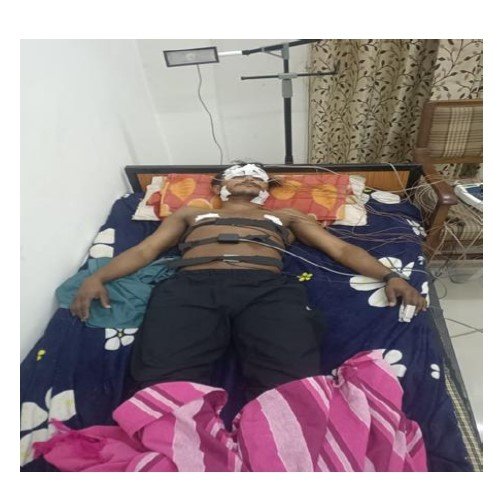
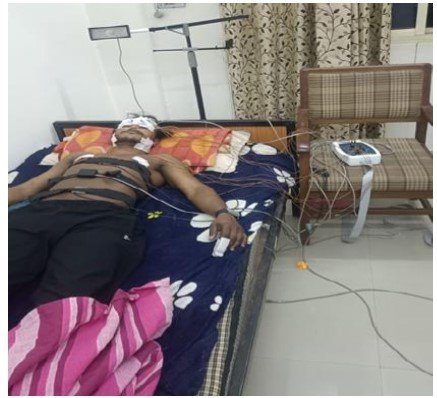
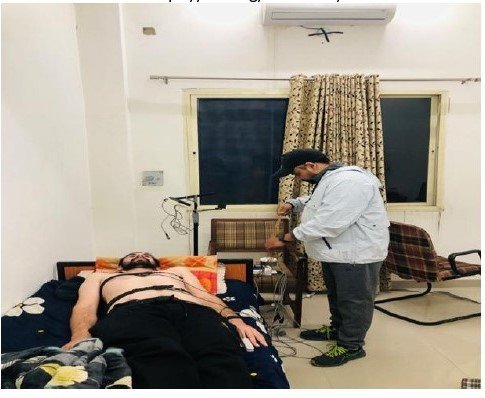
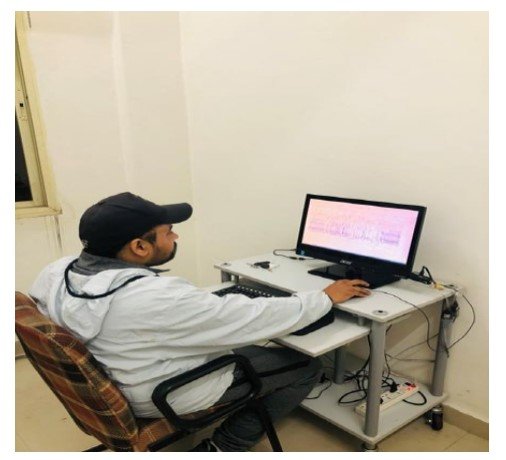
The Polysomnography sleep parameters were assessed prior to and following the exercise protocol. Each participant underwent all-night polysomnographic recordings for data collection at the physiology laboratory of the Department of Physical Education at Punjabi University Patiala. Every individual participated in testing for three consecutive nights. Polysomnography recordings were obtained nightly using a computerized system. The recordings commenced when the subjects generally retired for the night and concluded upon their customary awakening. A polysomnography with 24/32 channels from RMS Quest was utilized to record sleep. Standard electrodes were employed for the nocturnal polysomnography, consisting of 1-channel electromyography, 2-channel electrooculography, and 6-channel electroencephalography (F3-F4, M1-M2, O1-O2) (submental). Electrodes were attached to the subject’s skull and facial area, and procedures were conducted regularly. Nocturnal bedtime protocol for evaluating electroencephalography (EEG) and electrooculography (EOG). PSG employed the fully automated computerized scoring system. The individual can navigate around the bed unimpeded as the sensors are linked to the computer system through extended cables. The Investigator removed the sensor by the following morning
Findings of the study
The results and analysis concerning the variables of Time in Bed (TIB), Total Sleep Time (TST), Rapid Eye Movement Latency (REML), and Rapid Eye Movement (REM) between pre-test and post-test means for each group, as well as between the experimental and control groups following 12 weeks of training, have been delineated individually
Table – 4.1
Groups | N | Pre – test | Post –test | Difference between mean | Standard error of difference | Level of Significance | ‘t’ Ratio | P value | Remarks |
Experimental Group | 15 | 443.72 | 445.66 | -1.934 | 3.821 | 0.05 | -.506 | .621 | Null hypothesis is accepted |
Control Group | 15 | 454.9647 | 452.2293 | 2.73533 | 3.84997 | .710 | .489 |
Comparison Between Pre-Test and Post-Test Means of Experimental Group and Control Group with Regard to Time in Bed Among Male Adults
* Significant at .05 level t.05 (14) = 2.14
The result of pre-test and post-test Means of Experimental Group and Control Group on variable Time in Bed Among Male Adults as measured by polysomnography after training period as obtained in table no. 4.1 the t ratio(-.506 Experimental group), (.710 Control group) and the p value (.621 Experimental group), (.489 Control group) of experiment group and control group was insignificant and they showed no improvement in total time bed variable among male adults after the training period. The result of table no. 4.1 was also illustrated in figure 4.1.
Figure – 4.1: Comparison Between Pre-Test and Post-Test Means of Experimental Group and Control Group with Regard to Time in Bed Among Male Adults
Table – 4.2
Comparison Between Pre-Test and Post-Test Means of Experimental Group and Control Group with Regard to Total Sleep time Among Male Adults
Groups | N | Pre – test | Post –test | Difference between mean | Standard error of difference | Level of Significance | ‘t’ Ratio | P value | Remarks |
Experimental Group | 15 | 344.5053 | 368.0300 | -23.52467 | 14.50164 | – 1.622 | .127 | Null hypothesis is accepted | |
0.05 | |||||||||
Control Group | 15 | ||||||||
328.4387 | 333.0367 | -4.59800 | 8.07984 | -.569 | .578 |
* Significant at .05 level t.05 (14) =2.14
It is evident from table no 4.2 that experimental and control group was existing insignificant in the variable Total Sleep time as measured by polysomnography after training period as obtained t ratio -1.622, -.569 and p value .127, .578 of experimental group and control group receptively was found lower then tabular value 2.14 required to be significant at 0.05 level of confidence with the degree of freedom 14 and p value was found higher than 0.05 level. The result of table no. 4.2 was also illustrated in figure 4.2
Figure – 4.2: Comparison between Pre-Test and Post-Test Means of Experimental Group and Control Group with Regard to Total Sleep time among Male Adults
Table – 4.3: Comparison between Pre-Test and Post-Test Means of Experimental Group and Control Group with Regard to Rapid eye movement latency among Male Adults
Groups | N | Pre – test | Post –test | Difference between mean | Standard error of difference | Level of Significance | ‘t’ Ratio | P value | Remarks |
Experimental Group | 15 | 148.6467 | 139.8693 | 8.77733 | 1.02829 | 0.05 | 8.536 | .000 | Null hypothesis is rejected |
Control Group | 15 | 153.6753 | 153.8020 | -.12667 | .63046 | -.201 | .844 |
* Significant at .05 level t.05 (14) =2.14
The result of pre-test and post-test Means of Experimental Group and Control Group on variable Rapid eye movement latency Among Male Adults as measured by polysomnography after training period as obtained in table no. 4.3 the t ratio(8.536 Experimental group), (-.201 Control group) and the p value(.000 Experimental group), (.844 Control group) of experiment group and control group was significant and they showed improvement in Rapid eye movement latency variable among male adults after the training period. The result of table no. 4.5 was also illustrated in figure 4.3.
Figure – 4.3: Comparison between Pre-Test and Post-Test Means of Experimental Group and Control Group with Regard to Rapid Eye Movement Latency among Male Adults
Table – 4.4: Comparison between Pre-Test and Post-Test Means of Experimental Group and Control Group with Regard to Rapid eye movement among Male Adults
Groups | N | Pre – test | Post – test | Difference between mean | Standard error of difference | Level of Significance | ‘t’ Ratio | P value | Remarks |
Experimental Group | 15 | 74.8480 | 66.4960 | 8.35200 | 1.44390 | 0.05 | 5.784 | .000 | Null hypothesis is rejected |
Control Group | 15 | 78.4407 | 78.6340 | -.19333 | .85307 | -.227 | .824 |
* Significant at .05 level t.05 (14) =2.14
It is clear from Table No. 4.4 that a significant difference existed between the experimental and control groups in the variable Rapid eye movement, as measured by polysomnography after the training period. The obtained t-values of 5.784 and –.227, and corresponding p- values of .000 and .824 for the experimental and control groups respectively, indicate that the experimental group showed a statistically significant difference when compared with the control group. The calculated t-value exceeded the tabular value of 2.14 required for significance at the 0.05 level with 14 degrees of freedom, and the p-value was found to be below 0.05. The findings of Table No. 4.4 are further depicted in Figure 4.4.
Figure – 4.4: Comparison between Pre-Test and Post-Test Means of Experimental Group and Control Group with Regard to Rapid eye movement among Male Adults
DISCUSSION OF FINDINGS
The present study was designed to inspect the effect of yoga training program on selected polysomnography variables among male adults of Punjabi University, Patiala. To achieve the purpose of the study total thirty (N=30) male students with age group of 23- 25 years (Mean ± SD: age 23.95 ± 2.21years,) from Punjab was selected as subjects. The subjects were randomly assigned into two groups: group-A (N1=15) yoga training group underwent twelve weeks training protocol and Group-B (N2=15) acted as Control group who did not participate in any special training apart from the regular day to day activities. To assess the effect of twelve weeks training protocol researcher had selected following parameters as Polysomnography sleep variables:
Time in bed (TIB)
Total sleep time (TST)
Rapid eye movement latency (REML)
Rapid eye movement (REM)
Based on the statistical analysis of data following findings were drawn:
The study’s results indicated that the time spent in bed by male adult students in both the experimental and control groups was not significantly affected following the implementation of a 12-week yoga training program. The study’s results corroborated the findings of Halson & Sargent (2022), who also asserted that yoga training produced no alterations in the time spent in bed by elite team sport athletes. The results of the current analysis revealed that after a 12-week yoga training program, the total sleep time of male adult students in both the experimental and control groups was not statistically different. The study’s results corroborate the findings of Ganga Dhara and Alrahbi (2024), who reported similar outcomes in their research titled “Effect of a 12-Week Yogic Training Program on Selected Total Sleep Time of Women.” The findings of the current study indicated that the rapid eye movement delay of male students considerably increased following the implementation of a 12-week yoga training program. The findings of Bandyopadhyay & Koley (2023) corroborated that yogic and aerobic training significantly altered the rapid eye movement delay in healthy persons. The results of the current analysis indicated that after a 12-week yoga training program, the Rapid Eye Movement of the male students in the experimental group considerably increased compared to the control group. The discovery was corroborated by the conclusions of Datta et al. (2023), who demonstrated in their study that yoga training aids in sustaining an acceptable level of rapid eye movement.
TESTING OF HYPOTHESES
It was hypothesized that yogic training would have no significant effect on Time in Bed (TIB) among male adults at Punjabi University, Patiala. Consequently, hypothesis number one, which posited that a 12-week yoga training program would have an inconsequential effect on Time in Bed (TIB) among male students, was accepted.
The second hypothesis posited that yoga training will not significantly affect Total Sleep Time (TST) in male adults at Punjabi University, Patiala. The results of the current study indicated that participation in a 12-week yoga training program had an insignificant effect on total sleep time (TST) among male adults. Consequently, hypothesis number two was likewise accepted. The current study demonstrated a significant increase in rapid eye movement latency (REML) among male adults following a 12-week yoga training program. Consequently, hypothesis number five, which posited that yoga training would have no significant effect on Rapid Eye Movement latency (REML) among male adults at Punjabi University, Patiala, is rejected. That yoga training would have no significant effect on Rapid Eye Movement (REM) in male adults at Punjabi University, Patiala. The results of the current study indicated that participation in a 12-week physical training program significantly increased Rapid Eye Movement (REM) among male adults. Consequently, hypothesis number ten was also dismissed.
CONCLUSIONS
The results of the study revealed that Time in bed of male adult students of experimental group and control group was insignificantly after the application of 12 weeks yoga training program.
It was examined form the results of the present investigation that after the application of 12 weeks yoga training program regarded Total sleep time of male adult students of experimental group and control group was insignificantly.
The results of present investigation showed that Rapid eye movement latency of male students was increased significantly after the application of 12 weeks yoga training program.
It was observed form the results of the present investigation that after the application of 12 weeks yoga training program regarded Rapid eye movement of male students’ experimental group and control group was increased significantly.
IMPACT OF THE STUDY
This study deepens scientific understanding of how structured yoga training influences sleep ability in male adults, addressing a clear gap where objective research on yoga and sleep quality has remained limited.
It offers practical value to the general population by high lighting yoga as a structured, evidence-based approach for improving specific aspects of sleep, helping individuals choose suitable non-pharmacological methods for better rest.
The findings provide useful guidance for coaches, athletes and physically active individuals by demonstrating how yogic practices can be integrated into training routines to support recovery and optimize sleep related restoration.
The study lays a foundation for future research aimed at developing clearer guidelines on sleep efficiency, sleep duration, and the broader relationship between sleep and cognitive performance.
By objectively examining sleep through polysomnography, the research clarifies the interaction between yoga practices and sleep physiology, encouraging further investigation into how targeted yogic or sleep-based interventions may enhance overall sleep efficiency and mental functioning.
RECOMMENDATIONS FOR FUTURE RESEARCH
In the light of the conclusions drawn from the study it was recommended that:
Similar training protocols may be carried out for longer duration.
The effect of present training protocol may be assessed on some other and more variables.
Analogous study may be undertaken with female subjects.
These types of training program may be beneficial for obese, diabetic patient etc.
Similar training protocols may be favorable for athletes of aerobic activities.
Training program may be made more effective with the help of some other additional equipment and advance training facilities.
With the financial support by concerned governmental organizations, similar study can by conduct on large population.
Statements & Declarations
Authors’ Contribution: All authors contributed significantly to this research. Amarjit Singh conceptualized the study and drafted the initial manuscript. Harneet Singh was responsible for the methodology and statistical analysis of the polysomnographic data. Mehul Puri handled data collection, participant coordination, and literature review. All authors reviewed and edited the final version of the paper.
Peer Review: This article has undergone a double-blind peer-review process conducted by the editorial board of Shodh Sari-An International Multidisciplinary Journal to ensure academic integrity and scientific rigor.
Competing Interests: The authors declare that they have no known competing financial interests or personal relationships that could have appeared to influence the work reported in this paper.
Funding: The authors received no financial support or research grants from any public, commercial, or not-for-profit sectors for the research, authorship, and/or publication of this article.
Data Availability: The data supporting the findings of this study are available from the corresponding author upon reasonable request, subject to the privacy of the research participants.
Ethical Approval: This study was conducted in accordance with the ethical standards of the institutional research committee. Informed consent was obtained from all participants prior to their involvement in the yogic training and polysomnographic monitoring.
License © 2026 International Council for Education Research and Training. This work is licensed under a Creative Commons Attribution 4.0 International License (CC BY 4.0), which allows for the sharing and adaptation of the material provided the original authors and journal are properly credited.
References
Afonso, R. C., Gonzalez-Devesa, D., Vieites, L. I., & Perez, C. A. (2025). Efficacy of yoga for managing sleep problems among military veterans: A systematic review. Journal of Military and Veterans Health, 33(3), 50–61.
Åkerstedt, T., Schwarz, J., Lindberg, E., & Theorell-Haglöw, J. (2022). Total sleep time, sleep efficiency, and next day subjective sleepiness in a large group of women. Sleep Advances, 3(1), zpac028.
Akiyama, Y., Inoue, R., Takeuchi, Y., Ogata, M., Tsuzuki, K., & Tanabe, S. I. (2018). Evaluation of thermal environment considering the effects of body movement during sleep. Journal of Environmental Engineering (Japan), 83(752), 831–838.
Al-Ayyad, M., Owida, H. A., De Fazio, R., Al-Naami, B., & Visconti, P. (2023). Electromyography monitoring systems in rehabilitation: A review of clinical applications, wearable devices and signal acquisition methodologies. Electronics, 12(7), 1520.
Alghosi, M., Sharifi, M., Namavari, S., Rajamand, N., Bamorovat, F., Norouzi, N., & Konrad, A. (2025). The effect of chronic yoga interventions on sleep quality in people with sleep disorders: A scoping review. Frontiers in Neurology, 16, 1566445.
Alvarez-Estevez, D. (2025). Benchmarking quantum machine learning kernel training for classification tasks. IEEE Transactions on Quantum Engineering.
Alvarez-Estevez, D. (2023). Challenges of applying automated polysomnography scoring at scale. Sleep Medicine Clinics, 18(3), 277–292.
Baklouti, S., Fekih-Romdhane, F., Guelmami, N., Bonsaksen, T., Baklouti, H., Aloui, A., & Jarraya, M. (2023). The effect of web-based Hatha yoga on psychological distress and sleep quality in older adults: A randomized controlled trial. Complementary Therapies in Clinical Practice, 50, 101715.
Bandyopadhyay, N., Das, T., Biswas, A., & Koley, A. (2023). Effects of yogic intervention on sleep quality of healthy elderly: A systematic review. Universal Journal of Public Health, 11(1), 78–88.
Basis, N., Boker, L. K., & Shochat, T. (2025). Religiosity, religious orientation, and a good night’s sleep: The role of anxiety and depression. Journal of Sleep Research, 34(5), e70055.
Bera, T. K., Ganguly, S. K., Jolly, S. R., & Gharote, M. L. (1998). Effects of three-year yogic exercise programme on motor function in school boys. Yoga Mimamsa, 33, 1–21.
Bian, W. J., Brewer, C. L., Kauer, J. A., & de Lecea, L. (2022). Adolescent sleep shapes social novelty preference in mice. Nature Neuroscience, 25(7), 912–923.
Birrer, V., Elgendi, M., Lambercy, O., & Menon, C. (2024). Evaluating reliability in wearable devices for sleep staging. NPJ Digital Medicine, 7(1), 74.
Bu, Z. J., Liu, F. S., Shahjalal, M., Song, Y. K., Li, M. C., Zhuo, R. E., & Liu, Z. L. (2025). Effects of various exercise interventions in insomnia patients: A systematic review and network meta-analysis. BMJ Evidence-Based Medicine.
Burchard, T., & Chidekel, A. S. (2024). What is a polysomnogram? In Curbside consultation in pediatric sleep disorders (pp. 215–220). CRC Press.
Canever, J. B., Zurman, G., Vogel, F., Sutil, D. V., Diz, J. B. M., Danielewicz, A. L., & de Avelar, N. C. P. (2024). Worldwide prevalence of sleep problems in community-dwelling older adults: A systematic review and meta-analysis. Sleep Medicine, 119, 118–134.
Castro, P. B., Kowdley, H. G., Joyner, R. L., & Kowdley, G. C. (2024). Sudarshan Kriya Yoga and its effects on sleep: A systematic review of a breathing technique for sleep improvement. Journal of Applied Consciousness Studies, 12(1), 52–57.
Chatterjee, S., Mondal, S., & Singh, D. (2021). Effect of 12 weeks of yogic training on neurocognitive variables: A quasi-experimental study. Indian Journal of Community Medicine, 46(1), 112–116.
Chattopadhyay, K., Mishra, P., Manjunath, N. K., Harris, T., Hamer, M., Greenfield, S. M., … & Prabhakaran, D. (2020). Development of a yoga program for type-2 diabetes prevention (YOGA-DP) among high-risk people in India. Frontiers in Public Health, 8, 548674.
Chaudhari, K. S., Chaudhari, S. S., Rankhambe, H. B., Kochupillai, V., & Tiwari, R. R. (2021). Effect of Sudarshan Kriya Yoga (SKY) on daytime and situational sleep propensity in novice practitioners: A prospective cohort study. Journal of Complementary and Integrative Medicine, 18(3), 585–592.
Chen, Y., Li, Y., Li, S., He, M., Chen, Q., Ru, T., & Zhou, G. (2024). When and what: A longitudinal study on the role of screen time and activities in adolescent sleep. Sleep Medicine, 117, 33–39.
Chobe, S. V., Patra, S. K., Chobe, M., Metri, K. G., & Nagarathna, R. (2021). Role of yoga on sleep and quality of life among elderly. Turkish Online Journal of Qualitative Inquiry, 12(9).
Chokroverty, S. (2017). Physiological changes of sleep. In Sleep disorders medicine: Basic science, technical considerations and clinical aspects (pp. 153–194). Springer New York.
d’Onofrio, P., Jernelöv, S., Rosén, A., Blom, K., Kaldo, V., Schwarz, J., & Åkerstedt, T. (2023). The polysomnographical meaning of changed sleep quality: A study of treatment with reduced time in bed. Brain Sciences, 13(10), 1426.
Datta, K. (2022). Physiological changes during sleep. In Making sense of sleep medicine (pp. 15–19). CRC Press.
Datta, K., Bhutambare, A., Narawa, Y., Srinath, R., & Kanitkar, M. (2023). Improved sleep, cognitive processing and enhanced learning and memory task accuracy with Yoga nidra practice in novices. PLOS ONE, 18(12), e0294678.
Datta, K., Mallick, H. N., Tripathi, M., Ahuja, N., & Deepak, K. K. (2022). Electrophysiological evidence of local sleep during yoga nidra practice. Frontiers in Neurology, 13, 910794.
Datta, K., Tripathi, M., Verma, M., Masiwal, D., & Mallick, H. N. (2021). Yoga nidra practice shows improvement in sleep in patients with chronic insomnia: A randomized controlled trial. National Medical Journal of India, 34(3).
De Nys, L., Anderson, K., Ofosu, E. F., Ryde, G. C., Connelly, J., & Whittaker, A. C. (2022). The effects of physical activity on cortisol and sleep: A systematic review and meta-analysis. Psychoneuroendocrinology, 143, 105843.
de Orleans Casagrande, P., Coimbra, D. R., de Souza, L. C., & Andrade, A. (2023). Effects of yoga on depressive symptoms, anxiety, sleep quality, and mood in patients with rheumatic diseases: Systematic review and meta‐analysis. PM&R, 15(7), 899–915.
Dhaniwala, N. K. S., Dasari, V., & Dhaniwala, M. N. (2020). Pranayama and breathing exercises-types and its role in disease prevention & rehabilitation. Journal of Evolution of Medical and Dental Sciences, 9(44), 3325–3331.
Driller, M. W., Dunican, I. C., Omond, S. E., Boukhris, O., Stevenson, S., Lambing, K., & Bender, A. M. (2023). Pyjamas, polysomnography and professional athletes: The role of sleep tracking technology in sport. Sports, 11(1), 14.
Espinoza, E. (2025, May). Assessing the effect of the COVID-19 pandemic on sleep patterns in children using polysomnography. In SLEEP (Vol. 48, pp. A448–A449). Oxford University Press.
Falup-Pecurariu, C., Diaconu, Ș., Țînț, D., & Falup-Pecurariu, O. (2021). Neurobiology of sleep. Experimental and Therapeutic Medicine, 21(3), 272.
Farrahi, V., & Rostami, M. (2024). Machine learning in physical activity, sedentary, and sleep behavior research. Journal of Activity, Sedentary and Sleep Behaviors, 3(1), 5.
Firdaus, F. A., Noviati, E., Kusumawaty, J., Ariyanto, H., & Khaerunnisa, R. N. (2020). The effect of yoga on quality of sleep; literature review. In Proceedings of Universitas Muhammadiyah Yogyakarta Graduate Conference (Vol. 1, No. 1, pp. 76–81).
Foti, D., Weinberg, A., Dien, J., & Hajcak, G. (2011). Event‐related potential activity in the basal ganglia differentiates rewards from nonrewards: Temporospatial principal components analysis and source localization of the feedback negativity. Human Brain Mapping, 32(12), 2207–2216.
Knoop, M. S., de Groot, E. R., & Dudink, J. (2021). Current ideas about the roles of rapid eye movement and non–rapid eye movement sleep in brain development. Acta Paediatrica, 110(1), 36–44.