
Eduphoria - An International Multidisciplinary Magazine
Vol.04, Issue 02 (Apr-Jun 2026)
An International scholarly/ academic magazine, peer-reviewed/ refereed magazine, ISSN : 2960-0014
Artificial Intelligence in Higher Education: Prospects, Challenges, and Strategic Implications
Amila N.K.K. Gamage
Assistant Professor, LIGS University, US
Abstract
Artificial intelligence (AI) is no longer a distant prospect in higher education but a present reality shaping the way universities teach, learn, and operate. In recent years, AI has been applied to personalize learning, streamline administration, and expand access to knowledge on a global scale. At the same time, it raises profound questions about ethics, inequality, and the future role of human educators. Drawing on peer-reviewed publications (2021–2025), this article explores the promises and risks of AI in higher education. It reviews current applications, examines challenges such as academic integrity, digital divides, and data security, and considers strategies for universities, policymakers, students, and industry partners. The findings suggest that AI holds transformative potential, but its success depends on responsible adoption that balances innovation with academic values.
Keywords: Artificial intelligence, higher education, digital learning, academic integrity, AI adoption, equity
About The Authour
Dr. Amila Gamage is an educator, researcher, and international trainer with over two decades of expertise in contract management, project delivery, and facilities management across Singapore, Malaysia, and the wider region. She is the Founder and Principal Consultant of Sihela Consultants, providing specialised training and consultancy in contract administration, dispute resolution, and project management. Her professional background includes involvement in high-rise developments and major infrastructure projects, spanning the full project lifecycle. She also lectures at leading universities, currently serving as Assistant Professor at LIGS University (US) and Associate Professor at other institutions. An ACLP-certified trainer, Dr. Gamage integrates academic scholarship with practical industry experience to deliver impactful learning. She is a frequent speaker at international conferences and serves on the editorial boards of reputed journals, contributing to the advancement of research and professional practice.
Impact Statement
This paper provides a timely synthesis of how artificial intelligence is transforming higher education across teaching, learning, administration, and research. By drawing on recent literature (2021–2025), it identifies both the significant opportunities of AI and critical challenges including academic integrity, digital inequality, data privacy, and ethical governance. The study offers practical value for university leaders, educators, and policymakers by emphasizing that the key issue is not whether to adopt AI, but how to implement it responsibly. It highlights the importance of aligning AI integration with core academic values, including fairness, inclusivity, and trust, while safeguarding the role of human judgment in educational processes. Strategically, the paper supports institutions in developing balanced AI adoption frameworks that enhance learning outcomes without compromising ethical standards. It also contributes to ongoing academic discourse by outlining the need for future research on sustainable, equitable, and human-centered AI implementation in diverse higher education contexts.
Cite This Article
APA Style (7th Edition): Gamage, A. N. K. K. (2026). Artificial intelligence in higher education: Prospects, challenges, and strategic implications. EDUPHORIA – An International Multidisciplinary Magazine, 4(2), 91–97. https://doi.org/10.59231/EDUPHORIA/230484
Chicago Style (17th Edition): Gamage, Amila N.K.K. “Artificial Intelligence in Higher Education: Prospects, Challenges, and Strategic Implications.” EDUPHORIA – An International Multidisciplinary Magazine 4, no. 2 (2026): 91–97. https://doi.org/10.59231/EDUPHORIA/230484.
MLA Style (9th Edition): Gamage, Amila N.K.K. “Artificial Intelligence in Higher Education: Prospects, Challenges, and Strategic Implications.” EDUPHORIA – An International Multidisciplinary Magazine, vol. 4, no. 2, 2026, pp. 91–97, https://doi.org/10.59231/EDUPHORIA/230484.
Subject: Educational Technology / Artificial Intelligence in Education
Thematic Classification: Educational Technology, Artificial Intelligence (AI), Higher Education Policy, Pedagogical Innovation.
Introduction
The history of higher education has often been described as a balance between tradition and transformation. Universities are built on centuries-old foundations of teaching and research, yet they constantly evolve in response to external pressures such as demographic shifts, technological revolutions, and changing labour market demands. Today, artificial intelligence (AI) represents one of the most disruptive forces to confront academia, not as a distant prospect but as a reality. Artificial Intelligence has already started shaping classrooms, research practices, and administrative systems. AI’s rapid advancement demands urgent reflection on how it can be integrated into higher education without eroding the values that make universities essential to society. This is different from past innovations that were gradually adopted. We experience that the digital age is reshaping universities in ways that are deeper and faster than previous transformations. On the other hand, today universities must explore an environment that is more competitive, complex, and dynamic than ever before with the acceleration of technological innovation, globalization, and changing student demographics.
The COVID-19 pandemic provided a stress test for higher education systems worldwide. It forced institutions to adopt online teaching almost overnight (Deroncele-Acosta et al.,2023). This sudden shift demonstrated both the possibilities and the limitations of digital learning. Online platforms, learning management systems, and massive open online courses (MOOCs) moved from the periphery to the center of higher education delivery (Papadakis, 2023). In many ways, this disruption permanently altered student and faculty expectations. On the other hand, flexibility, hybrid models, and digital support have become standard features, rather than temporary solutions (Kuleto et al.,2021).
Amid these developments, artificial intelligence has emerged as one of the most powerful forces that drive change. AI is increasingly integrated into the tools and platforms that shape learning, research, and administration. AI has the potential to influence every layer of the academic ecosystem unlike previous technologies that supported higher education in specific ways. It can recommend personalized learning paths, power predictive analytics for student success, automate grading, support complex simulations, and accelerate research across disciplines (Munagandla et al., 2024).
Yet AI is not simply a neutral tool. It introduces new complexities around ethics, accountability, and academic integrity. For example, Large Language Models (LLMs) can generate high-quality content in really a short time. However, this raises questions about authorship and originality (Qadhi et al., 2024). Predictive algorithms may streamline admissions or retention efforts. But they can also perpetuate biases embedded in data (Christanti et al., 2024). These tensions highlight a central challenge. That is the future of higher education. The future of higher education will be defined not by whether AI is adopted, but by how it is implemented and governed.
This article provides a comprehensive review of how AI is reshaping higher education, drawing on peer-reviewed journal publications between 2021 and 2025. It examines current applications of AI in teaching, learning, research, and administration. This study considers the challenges and risks associated with AI use in higher education and further it explores broader implications for universities, policymakers, students, and industry partners. In doing so, it aims to answer four key research questions:
How is AI being integrated into higher education?
What opportunities and risks does it present?
What strategic responses are required from institutions and stakeholders?
What challenges exist in implementing AI equitably and sustainably?
By addressing these questions, the article seeks to provide a state-of-the-art perspective on the role of AI in shaping the future of universities in the digital age.
AI in Higher Education: Current Applications
AI in higher education can be grouped into three broad domains. These main domains are teaching and learning, administration, and research. In each area, it introduces new possibilities while simultaneously raising questions about value and impact.
Adaptive learning systems powered by AI are perhaps the most visible in teaching. These platforms monitor student performance, identify knowledge gaps, and personalize learning experiences by adjusting pace and content (George & Wooden, 2023). Unlike traditional models that apply uniform standards, adaptive systems respond to individual needs, making learning more targeted and efficient. AI tutors and chatbots extend support beyond classroom hours, offering instant feedback and clarification. This democratizes access to assistance, particularly for students who might not feel comfortable seeking help directly from faculty.
Faculty workloads are also being redefined. Automated grading systems reduce time spent on routine assessment tasks, while plagiarism detection tools help preserve academic integrity (Chu et al., 2022). AI also enables immersive learning environments through virtual reality (VR) and augmented reality (AR). Combined with AI, these technologies provide simulations for disciplines like medicine, engineering, and architecture, where practical experience is critical but physical resources are costly (Cicek et al., 2021). For international students, AI-based language processing tools simplify translation, writing support, and communication. This lowers barriers to global education (Gavira Durón & Jiménez-Preciado, 2025).
Considering administration, AI enhances efficiency and decision-making. Universities now employ AI-driven chatbots for admissions queries, course registration, and financial aid support. Therefore, AI tools help reducing delays and staff workload (Wu & Luo, 2025). Predictive analytics analyze student behavior to identify those at risk of disengagement or dropping out, allowing for timely intervention. Resource management systems use AI to optimize timetabling, classroom usage, and faculty assignments, leading to cost savings and smoother operations.
AI also plays an increasingly prominent role in research. It accelerates data analysis, enabling scholars to identify patterns in vast datasets that would be impossible to process manually. AI tools are facilitating interdisciplinary work and generating new insights from biomedical discoveries to social science trends. Further, collaborative AI platforms connect researchers across institutions and disciplines. This creates opportunities for innovation that transcend traditional academic boundaries (Qadhi et al., 2024). However, still these advancements raise questions about authorship, originality, and the balance between human creativity and machine efficiency.
Global Perspectives and Equity in AI Adoption
Although AI offers transformative opportunities, its adoption is uneven across the globe. In developed countries, universities often have the resources to invest in AI infrastructure, experiment with new platforms, and provide faculty training. These institutions are setting the pace for innovation, with well-funded EdTech partnerships and strong digital ecosystems (George & Wooden, 2023).
However, by contrast, universities in low- and middle-income countries face significant barriers. The digital divide that encompasses internet access, affordability, and digital literacy limits the ability of many students and faculty to benefit from AI-driven tools (Christanti et al., 2024). Infrastructure gaps create a risk of widening inequalities, where elite institutions provide cutting-edge experiences while others struggle with basic access.
The global EdTech market also reflects these disparities. While pandemic-era demand spurred rapid growth, on the other hand funding for startups has since slowed. This raised doubts about the sustainability of certain models (Panchal, 2024). For many regions, the challenge lies not in experimenting with AI, but in ensuring sustainable and equitable access. Therefore, policymakers have a crucial role to play in addressing structural inequalities and supporting investment in digital infrastructure.
Challenges and Risks
Despite its promise, AI in higher education is not without serious challenges. The most urgent concerns relate to access, ethics, faculty roles, privacy, and financial sustainability.
First, the digital divide continues to shape who benefits from AI. Students in disadvantaged regions risk exclusion without adequate connectivity, hardware, and literacy (Christanti et al., 2024). In addition, digital literacy itself is unevenly distributed. Ibrahim (2025) found that many educators, particularly in rural areas of Nigeria, lack sufficient training to integrate digital technologies into teaching. This shows that providing devices and connectivity alone is not enough; without the skills to use these tools effectively, the full potential of AI in education cannot be realized.
Second, academic integrity is being tested by the rise of AI-generated content. Although Detection tools are available, those are imperfect. This leaves institutions struggling to distinguish genuine student work from machine output (Wu & Luo, 2025).
Ethical concerns extend beyond plagiarism. Large language models can reproduce biases embedded in training data, potentially reinforcing stereotypes or generating misleading content (Qadhi et al., 2024). Faculty resistance adds another layer of complexity. While some embrace AI as a tool to reduce administrative burdens, others view it as a threat to pedagogical authority or job security. Faculty training, support, and involvement are essential to ensure AI complements higher education rather than weakens (Onuh et al., 2024).
Privacy and data security are also pressing concerns. AI systems depend on vast amounts of student data, raising questions about ownership, consent, and surveillance. Mismanagement of sensitive data could erode trust in institutions (Qadhi et al., 2024). Finally, financial sustainability remains a challenge. AI adoption requires continuous investment in technology, training, and maintenance, which may not be feasible for resource-constrained universities (Quy et al., 2023). Over-reliance on commercial EdTech providers further risks compromising academic independence.
Discussion and Recommendations
As we found in this study, the successful integration of AI in higher education depends on strategic, collaborative, and ethical approaches.
For universities, this means adopting AI to enhance human capabilities, not replace them. Faculty training and digital literacy must be prioritized to ensure confidence in AI-enabled teaching. Institutional policies should balance innovation with academic integrity, embedding ethical frameworks into practice.
On the other hand, the task for policymakers is to create enabling environments. Investment in infrastructure is critical to narrowing the digital divide. This particularly applies in underserved areas. Regulatory frameworks must address privacy issues, accountability, and AI algorithm fairness. Transparent policies can foster trust and ensure equity across diverse systems.
Students must also adapt by cultivating digital literacy, ethical awareness, and flexibility. On the other hand, skills such as critical thinking and creativity will remain vital beyond technical skills. Further, lifelong learning will be essential as AI continues to accelerate the pace of workforce transformation.
Meanwhile, industry partners have opportunities to collaborate with universities in co-creating tools tailored to educational needs. Such partnerships should prioritize student outcomes and ethical standards over commercial interests. Figure 1 shows a conceptual framework for AI Integration in higher education.
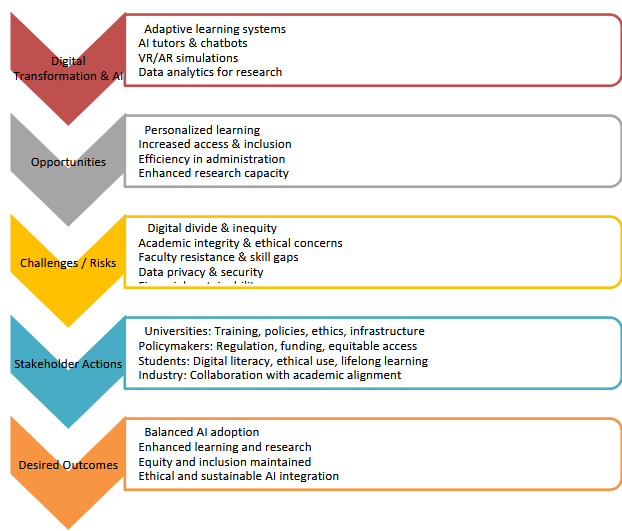
Figure 1: Conceptual Framework for AI Integration in Higher Education
Conclusion
The future of higher education is inseparable from the rise of artificial intelligence. This study identified that AI is already redefining teaching, learning, administration, and research. It offers extraordinary opportunities for personalization, efficiency, and innovation. However, it also raises significant challenges around ethics, equity, privacy, and sustainability.
The findings suggest that the central question for universities is not whether to use AI, but how to implement it responsibly. Institutions that adopt AI strategically will remain central to knowledge creation and social progress. For this, the strategies of AI adoption should focus on enhancing human learning, safeguarding academic values, and addressing inequalities. Institutions that either neglect AI altogether or adopt it without careful consideration risk weakening the principles of fairness, trust, and academic integrity. By carefully managing this balance, higher education holds the distinctive potential of not just adjusting to the digital era, but to actively influencing and defines its direction. Universities can ensure that the technology serves education rather than the reverse by aligning AI adoption with values of fairness, integrity, and inclusivity.
Statements & Declarations
Author’s Contribution: Gamage, A. N. K. K. conceptualized the research, performed a systematic literature review on AI applications in academia, and developed the framework for balancing technological opportunities with ethical implementation challenges.
Peer Review: This article has undergone a double-blind peer-review process organized by the Editorial Board of EDUPHORIA to ensure academic quality and technical accuracy.
Competing Interests: The author declares no financial or personal conflicts of interest that could inappropriately influence or bias the research presented in this article.
Funding: This research was conducted independently; no specific grant or external funding was received from public, commercial, or non-profit organizations.
Data Availability: All secondary data and reports used for analysis in this study are referenced within the manuscript and are available through the cited academic repositories.
Ethical Approval: The study adheres to academic integrity guidelines. Since the research involves theoretical and policy analysis rather than direct clinical trials with humans or animals, formal ethics committee clearance was not required.
License: This work is licensed under a Creative Commons Attribution-NonCommercial-NoDerivatives 4.0 International (CC BY-NC-ND 4.0) License.
References
Christanti, M. F., Mawangir, M., Arevin, A. T., Ramadhan, I., & Limijadi, E. K. S. (2024). The digital divide in education: Bridging gaps in the era of online learning. Migration Letters, 21(S4), 1070-1079.
Chu, H. C., Hwang, G. H., Tu, Y. F., & Yang, K. H. (2022). Roles and research trends of artificial intelligence in higher education: A systematic review of the top 50 most-cited articles. Australasian Journal of Educational Technology, 38(3), 22-42.
Cicek, I., Bernik, A., & Tomicic, I. (2021). Student thoughts on virtual reality in higher education—a survey questionnaire. Information, 12(4), 151.
Deroncele-Acosta, A., Palacios-Núñez, M. L., & Toribio-López, A. (2023). Digital transformation and technological innovation on higher education post-COVID-19. Sustainability, 15(3), 2466.
Gavira Durón, N., & Jiménez-Preciado, A. L. (2025). Exploring the role of AI in higher education: a natural language processing analysis of emerging trends and discourses. The TQM Journal.
George, B., & Wooden, O. (2023). Managing the strategic transformation of higher education through artificial intelligence. Administrative Sciences, 13(9), 196.
Ibrahim, A. (2025). MANAGING THE INTERSECTION OF ARTIFICIAL INTELLIGENCE AND HUMAN JUDGEMENT IN NIGERIAN EDUCATION: CHALLENGES AND WAY FORWARD.
Kuleto, V., Ilić, M., Dumangiu, M., Ranković, M., Martins, O. M., Păun, D., & Mihoreanu, L. (2021). Exploring opportunities and challenges of artificial intelligence and machine learning in higher education institutions. Sustainability, 13(18), 10424.
Munagandla, V. B., Dandyala, S. S. V., Vadde, B. C., & Engineer, D. (2024). AI-Driven Optimization of Research Proposal Systems in Higher Education. Revista de Inteligencia Artificial en Medicina, 15(1), 650-672.
Onuh, U. B., Egwu, J. U., & Ozokwere, H. (2024). CHALLENGES IN ARTIFICIAL INTELLIGENCE UTILIZATION FOR JOB MANAGEMENT EFFICIENCY AMONG ACADEMIC STAFF IN COLLEGES OF EDUCATION IN ANAMBRA STATE. Journal of Association of Educational Management and Policy Practitioners, 6(1), 244-256.
Panchal, N. (2024). The Indian Edtech Evolution: From Boom to Struggle and the Path Forward. Open Access Cases, 1(2).
Papadakis, S. (2023). MOOCs 2012-2022: an overview. Advances in Mobile Learning Educational Research, 3(1), 682-693.
Qadhi, S. M., Alduais, A., Chaaban, Y., & Khraisheh, M. (2024). Generative AI, research ethics, and higher education research: Insights from a scientometric analysis. Information, 15(6), 325.
Quy, V. K., Thanh, B. T., Chehri, A., Linh, D. M., & Tuan, D. A. (2023). AI and digital transformation in higher education: Vision and approach of a specific university in Vietnam. Sustainability, 15(14), 11093.
Wu, S., & Luo, M. (2025). Selection and Resource Allocation Strategies for Chatbot Technologies in Higher Education: An Optimization Model Approach. IEEE access.
Related Articles:
- Teachers’ Perceptions and Practices of Motivational Strategies in Public Speaking: Evidence from Selected Senior Secondary Schools in Lagos State
- Our Mother Earth- A Masterpiece To Care It Against The Problems- A Review
- History of environmental thought and action
- From Profit to Purpose: Managing Organizations for Community Well-being and Sustainable Futures
- The Role of Education in Promoting Community Resilience and Well-Being in India