Edumania-An International Multidisciplinary Journal
Vol-04, Issue-2 (Apr-Jun 2026)
An International scholarly/ academic journal, peer-reviewed/ refereed journal, ISSN : 2960-0006
A Life Beyond Money: Connecting People, Planet, and Progress at The Dayalbagh-Agra
Prakash, Piyush1 and Kumar, Rajesh2
1&2Assistant Professor, School of Architecture and Planning, Dayalbagh Educational Institute (Deemed to be University) Dayalbagh, Agra
ORCiD:0009-0002-1219-3009
Abstract
We intellectuals of this planet earth always try to build a good life for everyone, but we forget to understand how people’s happiness, strong economies, care for nature, and sustainable habits work together. This paper is about the fact that multidisciplinary approach to define a good and successful life is about more than just money. It focuses on how people connect with each other, care for nature, and do what is right for the community. This study looks at ideas from different fields to see how working together can help communities grow fairly, keeping people connected, and how everyone takes care of nature. This paper looks at how to involve people in decision-making, planning for climate challenges, and reusing resources can bring big positive changes. This paper helps to understand that there is a simple plan to show how local actions can support global goals for a better and greener future. It aims to start conversations on how to improve well-being in laws, research, and community work. This paper adds to the conference by sharing practical ideas that help people live better without harming the Earth.
Keywords: good life, money, goals, well-being.
About the Authors
Piyush Prakash is an Assistant Professor at the School of Architecture and Planning, Dayalbagh Educational Institute (DEI), Agra. His academic work focuses on sustainable design, urban planning, and creating architectural spaces that foster community interaction and environmental harmony.
Rajesh Kumar is an Assistant Professor at the School of Architecture and Planning, DEI, Agra. He specializes in the intersection of progress and planet-centric development, exploring how multidisciplinary approaches can redefine social well-being and resource management in modern habitations.
Impact Statement
This research challenges the traditional GDP-centric definition of success by offering a holistic “Life Beyond Money” framework rooted in the unique eco-system of Dayalbagh-Agra. By demonstrating how architectural planning, social connectivity, and environmental stewardship can co-exist, the study provides a scalable blueprint for sustainable urban living. The impact of this work lies in its ability to translate local, value-based actions into global Sustainable Development Goal (SDG) achievements. It serves as a vital guide for urban planners, architects, and policymakers seeking to build resilient communities that prioritize human happiness and planetary health oer mere financial gain.
Cite This Article
APA Style (7th Edition): Prakash, P., & Kumar, R. (2026). A life beyond money: Connecting people, planet, and progress at The Dayalbagh-Agra. Edumania-An International Multidisciplinary Journal, 4(2), 364–377. https://doi.org/10.59231/edumania/9216
Chicago Style (17th Edition): Prakash, Piyush, and Rajesh Kumar. “A Life Beyond Money: Connecting People, Planet, and Progress at The Dayalbagh-Agra.” Edumania-An International Multidisciplinary Journal 4, no. 2 (2026): 364–377. https://doi.org/10.59231/edumania/9216
MLA Style (9th Edition): Prakash, Piyush, and Rajesh Kumar. “A Life Beyond Money: Connecting People, Planet, and Progress at The Dayalbagh-Agra.” Edumania-An International Multidisciplinary Journal, vol. 4, no. 2, 2026, pp. 364–377. https://doi.org/10.59231/edumania/9216
Page Range: 364–377
DOI: https://doi.org/10.59231/edumania/9216
Subject: Sustainable Urbanism / Architecture & Planning / Social Sciences
Received: Sep 25, 2025
Accepted: Jan 03, 2026
Published: May 12, 2026
Thematic Classification: Multidisciplinary well-being, Sustainable habitations, Community-led planning, Eco-social resilience, Dayalbagh Model of Living.
Introduction
We as humans usually believe that a good life is all about getting more money and things. Which usually is not the case. Also, thinking like above makes us disconnected with our own personal happiness and with the Earth and Earth’s health and with that we are all connected. Even when we try to improve the world and get wealthier, we often miss that our own happiness, a healthy economy, protecting nature, and living sustainably are all connected.
This paper suggests that a person who lives a truly good and successful life doesn’t always wish for money. This paper also suggests that we need to look at many different things, like how we connect with each other, how much we respect nature, and how deeply we care about our communities. This paper also tries to bring together ideas from many different areas – like how people live in groups (which is the sociological aspect), how we protect the environment (environmental science aspect), how money works (economics aspect), and how cities are built (urban planning aspect). Also, study shows how working together can create fair and thriving communities.
It also looks at ways to keep people strongly connected and working together to protect our environment. By combining these different viewpoints, we can create a much fuller idea of what “progress” really means. This new idea would value things you can’t touch, like strong friendships and living in harmony with nature, just as much as, or even more than, money. The Dayalbagh in Agra, India, is a very unique community, which is like a spiritual retreat (Ashram) and a utopian society. The Dayalbagh community shows and encourages a way of life that is much more than just getting rich or having a lot of possessions.
Residents of The Dayalbagh community teaches mankind how to bring everything together, Dayalbagh perfectly demonstrates how happiness, the health of the environment, and socio-economics are all connected.
Multidisciplinary Approach to Well-being
In this new era of consciousness defining a “good life” solely through economic indicators such as GDP or say per capita income of people is insufficient. A more comprehensive approach and understanding entails integrating insights from various disciplines can be stated as-
Sociology and Psychology: In the Dayalabagh community both the fields reveal the importance of social connections, community participation, and mental health in overall happiness factor. This Ashram has prominent characteristics that strong social networks provide support, reduce isolation, and foster a sense of belonging, which are critical components of a fulfilling life. This research shows that meaningful relationships contribute more to long-term satisfaction than material possessions.
Environmental Science and Ecology: The Dayalabagh community teaches fundamental dependence of human well-being on a healthy planet. Residents of The Dayalabgh have access to clean air, water, and biodiverse ecosystems which is not merely a luxury but a prerequisite for survival and quality of life. We have to understand that ecological limits and natural processes are essential for developing sustainable practices that do not deplete vital resources for future generations.
Economics (Beyond GDP): The Dayalbagh, Agra, aligns with the principles of Economics Beyond GDP as it offers a living model that prioritizes mankind’s holistic well-being over mere financial situations. It allows communities that can thrive by integrating social and ecological considerations into its operational framework. Below are 3 categories of how The Dayalabagh create an ideal economic model for its residents sustainable living.
Income Equality and Resource Distribution
The Dayalbagh operates on principles of cooperative living and shared resources among the residents, which inherently address various aspects of income equality and also equitable resource distribution. Traditional economic systems which usually lead to vast wealth disparities, the Ashram-style community emphasizes people to have collective responsibility and mutual support. Promoting a system where the benefits and burdens are more evenly distributed among its members which reduces the intense focus on individual monetary accumulation. In The Dayalabagh resources are managed communally or for the collective good, providing essential services and opportunities is served to all, thereby embodying a practical application of equitable resource allocation is seen in the Ashram.
Value based Ecosystem of Services and Environmental Guardianship
The Dayalbagh community has deep-seated reverence for nature which can be translated into the value-based ecosystem of services. Dayalbagh engages in extensive environmental care, including organic farming, water conservation, and green initiatives -sustainable habitats recognizing the essential and economic value of healthy ecosystems. This approach is inclined with conventional economics, which usually externalizes environmental benefits. By practicing sustainable agriculture and maintaining lush green spaces making it lung to the Agra-City.
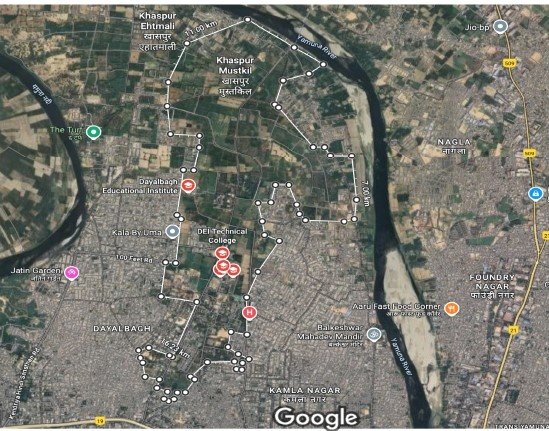
Urban Planning and Architecture in the vicinity of the Dayalbagh
The Dayalbagh community, Agra, offers a strong prototype for Urban Planning and Architecture. The human scale habitat of the Dayalbagh fosters human connection through its shared spaces and active spaces. The community is inclined towards green infrastructure, like organic farms, also promoting both well-being of residents as well as environmental quality. Sustainable transport with walkable and cyclable layouts also promotes non-motorized transportation systems in its vicinity.
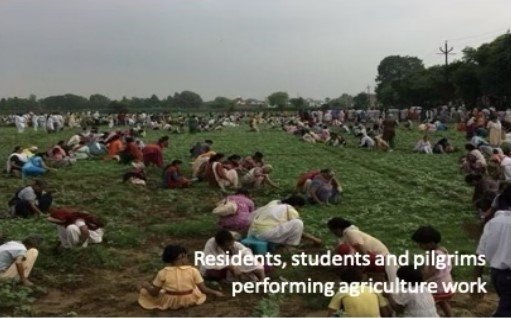
Agricultural fields of Dayalbagh
Connecting People
The Dayalbagh- Agra is a great real-life example of how-to bring people together, build strong communities, and make individuals happier. It naturally includes ways of doing things that match these ideas.
Participatory Governance and Decision-Making
The Dayalbagh promotes participatory governance which is the central attribute for its Ashram-style community and Decision-making. In the Dayalbagh community, people always work together to make decisions, because it is an Ashram like living and in discussion about the Dayalbagh’s spiritual and practical governance, every voice is duly considered and respected. It’s about inclusive decision-making, where all residents have a say. The actual process is based on collective participation of residents that ensures that all members contribute to shaping their community’s direction. This makes residents feel like they have their own part of the community. When everyone feels heard and helps steer the community, (with the policy of brotherhood) they become more committed to working together, making the society stronger and able to support the community wellbeing.
Promoting Social Infrastructure
The Dayalbagh is built in a way that naturally brings people together because it has many shared places like prayer halls, schools, hospitals, agricultural farms, and a community kitchen (Bhandar ghar). These shared areas facilitate casual, daily interactions that strengthen bonds and foster a sense of teamwork. Since everyone lives and shares responsibilities, they naturally connect beyond just their homes or jobs, which makes the community much stronger.
Intergenerational Programs
The Dayalbagh community has a traditional setup that naturally brings different age groups together. In the community people of all age groups live closely and work together, as a result the older members share their wisdom and skills, and younger ones bring fresh ideas. The concept of Superman to Complete man is achieved with this integrated approach that has a value transfer system. This integration helps bridge gaps between generations, building understanding and empathy.
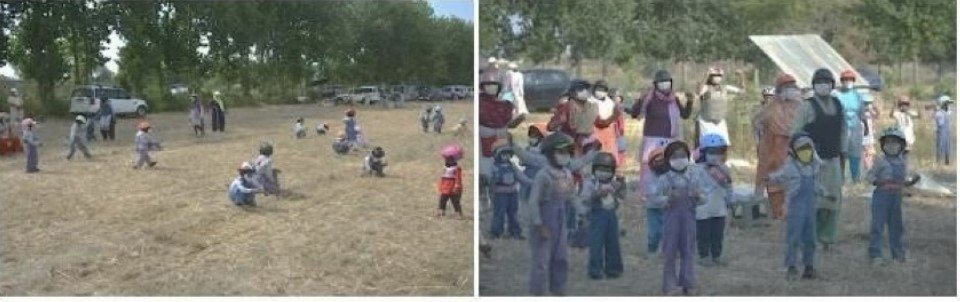
Children of age group 3 years to 8 years doing voluntary selfless social service
Digital Inclusion for Connection
Digitizing the world with online platforms for news, events, and learning actually boost real-life interactions, using digital tools can make people create connections stronger. The Dayalbagh, even with its traditional roots, uses technology smartly to connect people with its Esatsang Portal or its 911 ICT center of Dayalbagh Educational Institute that broadcast all the daily updates and educating people across the globe.
D.E.I. -BSNL Communication Services at Rajaborari Village Cluster
Caring for Nature
The Dayalbagh, Agra, provides living evidence to the principles of a sustainable future and living. People of The Dayalabagh demonstrate how a community can shift from exploitation to regeneration and conservation. The hands- on practices directly embody the key areas of focus for environmental stewardship which make The Dayalbagh a living laboratory.
Climate Challenge on Biodiversity- Conservation and Restoration by Planning and Adaptation
The Dayalbagh truly cares about protecting and restoring nature’s variety i.e. biodiversity. You can see this in its many green areas, gardens (Anupam Upvan), and how they farm organically. In addition to not using harsh chemicals like urea and pesticides, their organic farms provide a safe haven for plants and animals. The community’s extensive green spaces serve as vital corridors for wildlife and support local ecosystems. This shared stewardship of natural areas cultivates a strong sense of environmental responsibility, which is crucial for a healthy planet
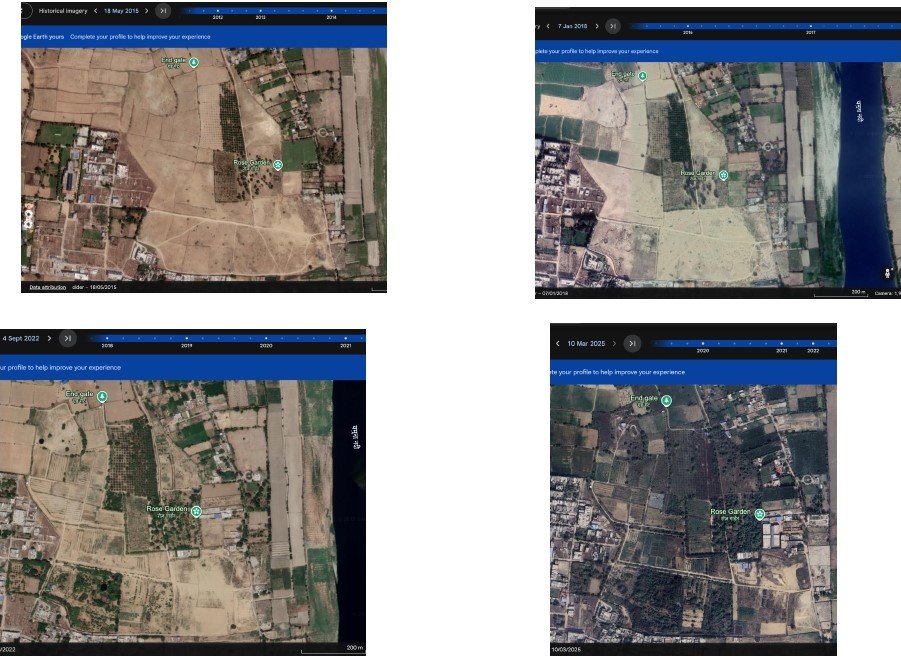
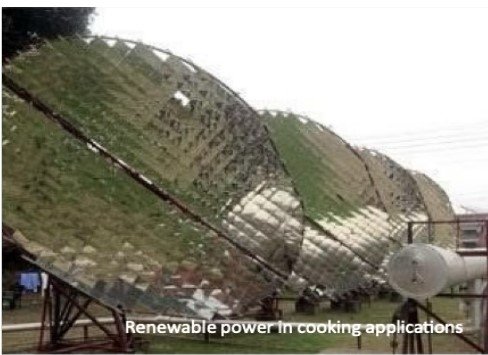
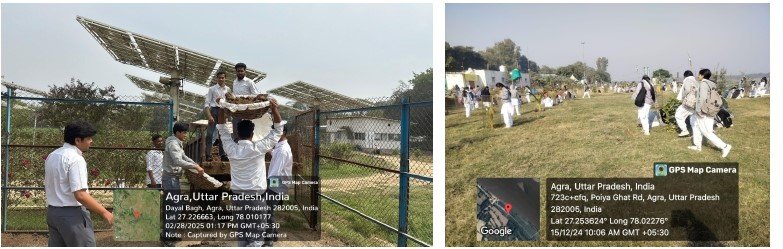
The Dayalbagh community actively tackles severe climate issues by committing to sustainable practices. They proactively implement eco-friendly methods and innovative solutions to address the significant challenges posed by climate change. Their dedication to sustainability is a core part of their strategy for environmental preservation. The community heavily invests in organic farming and making ponds to regenerate natural reservoirs in the Project like Anupam Upvan-Bio-diversity and Botanical Park also having extensive tree plantations in unproductive land that changed and revitalize the flora and fauna of the area by nature-based solutions that help minimizing carbon footprints and improve meso-climate of the area. While focusing on large-scale renewable energy that is fully solar equipped infrastructure as a separate entity, the vision is to reuse, recycle and reduce consumption and localized production that contributes to mitigate climate impact.
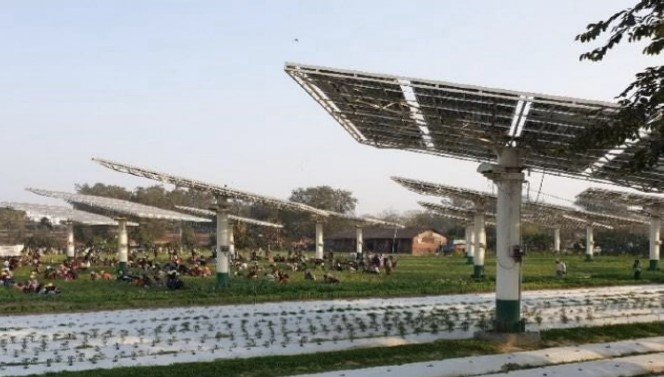
Solar Agricultural farms.
Resource Reuse and Circular Economy Principles
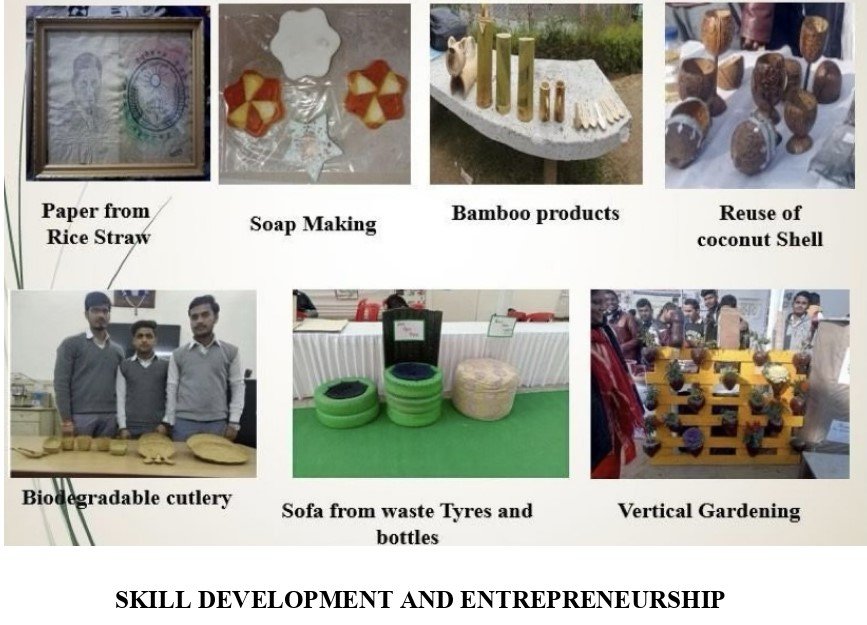
The community is a practical example of resource reuse and circular economy principles. The Dayalbagh emphasizes on waste minimization and the maximization of natural resource utility. People of the community make sure the organic waste is turned into compost for their farms, acting like a closed loop. By making things locally and fixing them, the community naturally makes products to last longer and move away from just using and throwing things away. This perfectly matches the idea of keeping resources in use as long as possible for future generations.
Sustainable Consumption and Production
Dayalbagh’s way of life promotes that the meaning of self- sufficient living is to understand sustainable consumption and production. The community has strong inherited values of simplicity, moderation, and making what they need themselves, they have reduced consumption footprints. Members of the community mostly use items that are made locally likely on their farms and in their workshops, that supports fair and responsible production. This local focus cuts down on pollution from long-distance transport and factories, helping people make smart choices.
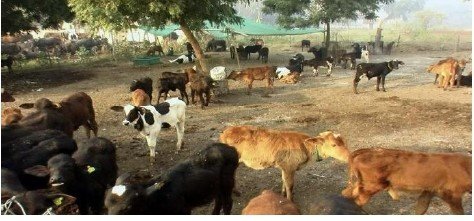
Livestock manure is an important source of nitrogen for the crops, highlighting synergies resulting from crop– livestock integration.
Fostering Progress Beyond Material Wealth
The Dayalbagh community in Agra always serves as a profound, living model for various research frameworks, as it demonstrates how true progress is achieved by the residents through holistic advancement. Ashram’s social and spiritual philosophy is centered about people wellbeing and environment, moving beyond mere economic measurements
Local Actions, Global Impact
The residents of Dayalbagh are truly inclined towards unconventional community-level initiatives that are direct evidence to how local actions can contribute and achieve sustainable goals. The community’s dedication to live a self-sufficient lifestyle, to achieve several UN Sustainable Development Goals (SDGs), including SDG 2 (Zero Hunger) and SDG 13 (Climate Action). The Dayalbagh Ashram maintains its own very special closed-loop system for- food production and waste management that can be studied and scaled, forming a distributed network of positive change.
Rethinking Development Metrics
The Dayalbagh model provides a real-world unconventional alternative to GDP-based metrics. The community’s success is not measured by financial buildup but by the collective well-being of the residents of the ashram, the health of the ecosystem, and the quality of its education provided to the people. The focus is to induce meaning of values, selfless service, and a harmonious relationship with nature helps to serve as a practical blueprint for the new indicators of well-being that the paper advocates for, centering social equity and planetary health.
Education for Sustainable Living
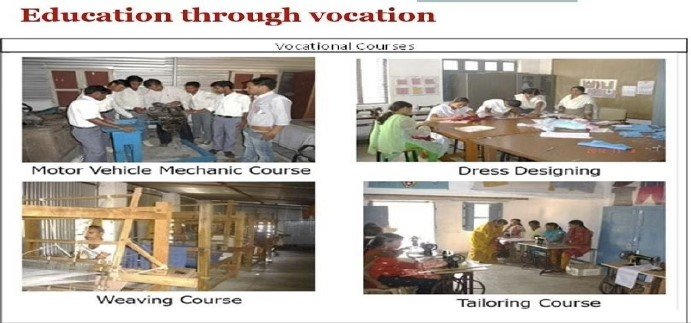
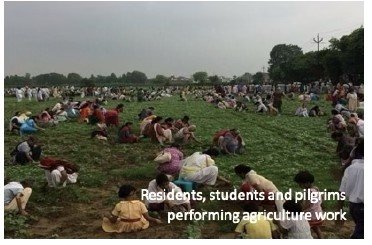
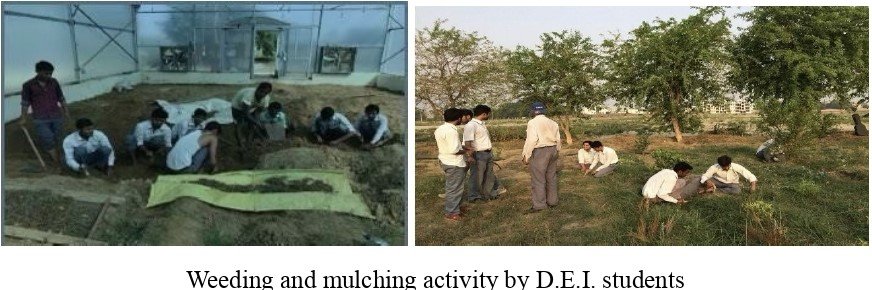
Education is the foundation of the Dayalbagh community. The prestigious Dayalbagh Educational Institute (DEI) integrates principles of sustainability, ethics, and social responsibility into its curriculum through their sigma 6Q concept from the genesis. The DEI curriculum extends beyond theoretical concepts; students of DEI participate in agricultural work and community service, which fosters a deep sense of responsibility and provides them expertise to address real-world challenges.
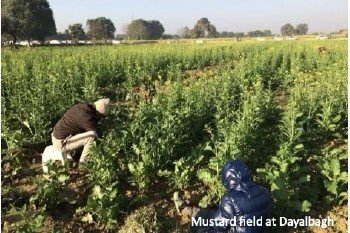
for- food production and waste management that can be studied and scaled, forming a distributed network of positive change.
Rethinking Development Metrics
The Dayalbagh model provides a real-world unconventional alternative to GDP-based metrics. The community’s success is not measured by financial buildup but by the collective well-being of the residents of the ashram, the health of the ecosystem, and the quality of its education provided to the people. The focus is to induce meaning of values, selfless service, and a harmonious relationship with nature helps to serve as a practical blueprint for the new indicators of well-being that the paper advocates for, centering social equity and planetary health.
Education for Sustainable Living
Education is the foundation of the Dayalbagh community. The prestigious Dayalbagh Educational Institute (DEI) integrates principles of sustainability, ethics, and social responsibility into its curriculum through their sigma 6Q concept from the genesis. The DEI curriculum extends beyond theoretical concepts; students of DEI participate in agricultural work and community service, which fosters a deep sense of responsibility and provides them expertise to address real-world challenges.
Promoting Regenerative Practices
Dayalbagh surpasses simple sustainability to actively promote regenerative practices in the community, an ashram model focused on creating net positive impact on the natural and social system. This is manifested in its organic farms and afforestation projects, aim to restore soil health and biodiversity also enriching the land over time. This regenerative approach of the Dayalbagh extends to community social systems, where a strong emphasis on community engagement and cooperation builds and restores social capital within the community, which foster a cohesive and resilient society living in the Dayalbagh.
Practical Applications
Translating these ideas and strategies into concerted effort across policy, research, and community engagement:
Research and Development:
Creating better ways to measure well-being: We need to measure happiness and health, not just money, it’s about wellbeing.
Studying community projects: We need to learn what makes community efforts successful so we can further promote.
Inventing sustainable technologies: This means creating new and better ways to use science and technology that don’t harm the environment.
Community Work and Engagement: Grassroots initiatives are often the effective drivers of change. Supporting and empowering community organizations through skill training, and social platforms for collaboration and their MOUs with different organizations and industries can lead to creative innovative and local solutions. Facilitating and knowledge sharing between communities facing similar challenges can accelerate the adoption of successful models.
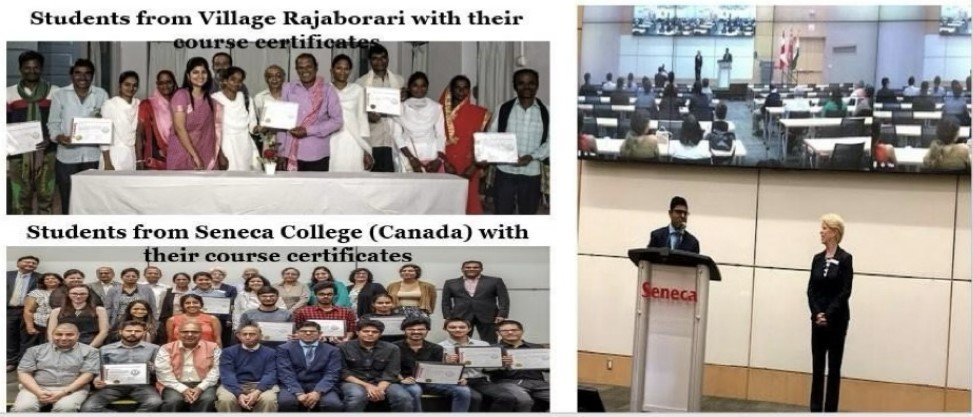
D.E.I. -Seneca (Canada) Collaboration: Successful Collaborative Course for Students from Tribal Areas and Canada.
Conclusion – A Symphony of Life Beyond Wealth
Deep within Agra a peaceful paradigm shift unfolds itself on the daily basis at The Dayalbagh. This Ashram- community is not just a collection of homes and heritage structures but it is a living laboratory for the future generation where true progress is not measured in money, but in harmony. The Dayalabagh itself stands as a powerful alternative to the prevailing narrative to the global preoccupation with consumerism, the community shows that the richest life is one built on strong bonds with community, people sharing purpose, and the deep respect for mother Earth.
Dayalbagh is a testament to the idea that humans, the environment, and economic stability are not separate pillars, but an interconnected ecosystem. Through its principles of cooperative living, organic farming, and a deep-seated commitment to education, it has created a self-sufficient, regenerative model. Here, waste becomes a resource, local action addresses global challenges, and the well-being of the community is a shared responsibility, not an individual burden.
The profound wisdom of Dayalbagh lies in its simplicity and high thinking. It shows us that to build a sustainable future, we must first learn to live sustainably with one another. It’s an invitation to shift our focus from “what can I get?” to “what can we build together?” Dayalbagh, therefore, is more than just a place on a map; it’s a model for a meaningful existence.
Statements & Declarations
Author’s Contribution: Piyush Prakash led the spatial analysis and the integration of architectural planning with the socio-economic framework. Rajesh Kumar focused on the multidisciplinary aspects of community well-being and the planet-centric progress model. Both authors jointly researched the “Dayalbagh Model” and drafted the manuscript.
Peer Review: This article has undergone a double-blind peer-review process organized by the Editorial Board of Edumania to ensure academic rigor and multidisciplinary integrity.
Competing Interests: The authors declare that they have no financial or personal interests that could be perceived as influencing the research findings or the interpretation of the Dayalbagh-Agra living model.
Funding: This research was supported by the internal resources of the School of Architecture and Planning, Dayalbagh Educational Institute. No external funding was received.
Data Availability: The findings are based on observational studies, institutional reports from Dayalbagh, and cited international frameworks (UN SDGs). Supporting data is available from the authors upon reasonable request.
Ethical Approval: The study adheres to ethical guidelines for academic research. As it focuses on institutional planning and philosophical frameworks for living, no direct human participant intervention trials were conducted.
License: This work is licensed under a Creative Commons Attribution-NonCommercial-NoDerivatives 4.0 International (CC BY-NC-ND 4.0) License.
References
Dayalbagh Educational Institute. (n.d.). DEI connect. https://www.dei.ac.in/dei/files/events/DEI_Connect.pdf
Juergensmeyer, M. (n.d.). Radhasoami. https://juergensmeyer.org/wp-content/uploads/2013/12/Radhasoami-for-Hind-enc-print.pdf
Dua, P., Dhir, A., Das, D. B., Allamraju, A., Narayan, A., & Gupta, V. B. (2023). Catalysing SDGs achievement through community engagement: A case study of the Dayalbagh model. Think20 (T20) India. https://t20ind.org/research/catalysing-sdgs-achievement-through-community-engagement/
Dayalbagh Educational Institute. (n.d.). Free medical camps. https://www.dei.ac.in/dei/nss/index.php/free-medical-camps/23-free-medical-camps
Dayalbagh Educational Institute. (n.d.). NSS activities. https://www.dei.ac.in/index.php?option=com_content&view=category&layout=blog&id=47&Itemid=296
Dayalbagh Educational Institute. (n.d.). Agroecology @ DEI. https://www.dei.ac.in/dei/edei/files/Agroecology%20@%20DEI%20.pdf
UNESCO. (2020, January 14). UNESCO and Sustainable Development Goals. https://en.unesco.org/sustainabledevelopmentgoals
Farrelly, M. (2016, October 13). Agroecology contributes to the Sustainable Development Goals. Ileia. https://www.ileia.org/2016/09/22/agroecology-contributes-sustainable-development-goals
Food and Agriculture Organization. (2018). The 10 elements of agroecology guiding the transition to sustainable food and agricultural systems. https://www.fao.org/3/i9037en/i9037en.pdf
Agarwal, S., & Goyal, V. (2026). Synergizing impact investing, green finance, and the circular economy: An empirical agenda for sustainable capital mobilization and resource efficiency in India. Shodh Sari-An International Multidisciplinary Journal, 5(2), 521–542. https://doi.org/10.59231/SARI7938
Sam-Kayode, C. O., & Raheem, T. R. (2026). Aesthetic dimensions of mathematics instruction: A multidisciplinary pathway for creativity, innovation and technological development. Edumania-An International Multidisciplinary Journal, 4(2), 336–363. https://doi.org/10.59231/edumania/9215
Related Articles:
- Climate To Smart Agriculture: A Pathway to Achieving SDG 2 In Rain to Fed Regions of India
- Shifting the Integrative Medicine Paradigm: Alternative Medicine-Based Constitutional Individualization Models for Developing Precision Therapeutics
- Development and Evaluation of Value-Added Snack Bars Using Orange Peel and Pomace Powder for Sustainable Nutrition
- Youth Mental Health and Social Well Being
- Empowering Young Minds for a Sustainable Future: A Multidisciplinary Exploration of Innovation, Leadership and Social Responsibility in the Twenty-First Century