
Edumania-An International Multidisciplinary Journal
Vol-04, Issue-2 (Apr-Jun 2026)
An International scholarly/ academic journal, peer-reviewed/ refereed journal, ISSN : 2960-0006
Development and Evaluation of Value-Added Snack Bars Using Orange Peel and Pomace Powder for Sustainable Nutrition
Kaur, Hamita Preet1 and Singh, Uttara2
1M.Sc. Student, 2Assistant Professor
Department of Foods and Nutrition, Government Home Science College, Sector 10-D, Chandigarh, Affiliated to Panjab University, Chandigarh
ORCiD:0009-0009-5506-5673
Abstract
Substantial amounts of by-products are generated during citrus processing, especially in the form of orange peels and pomace, which are most commonly considered as waste materials. However, orange peel and pomace are rich sources of dietary fibre, minerals, and bioactive compounds, suggesting a wide range of possibilities for their use in the development of value-added products. The present study was undertaken with an interest to explore the nutritional and functional applicability of orange peel and pomace powder in the preparation of an acceptable and nutrient-enriched snack product. Orange peel and pomace were dried under controlled conditions using a hot air oven and subsequently ground into fine powder. To assess their application in food product formulation, snack bars were developed by partially replacing rice flakes flour with a 1:1 mixture of orange peel and pomace powder at substitution levels of 5, 10, 15, and 20%, along with a control sample without substitution. Sensory evaluation of the developed snack bars was carried out using a nine-point hedonic scale to assess taste, appearance, aroma, colour, texture, and overall acceptability. Based on the sensory evaluation results, the most preferred formulation was selected and subjected to biochemical analysis, and its proximate composition and mineral content were evaluated in comparison with the control sample using standard analytical methods. The sensory analysis revealed that the addition of orange peel and pomace powder at different levels of substitution was not detrimental to the acceptability of the product. Among the different formulations, the snack bars with 20% flour substitution achieved the highest overall acceptability score. Biochemical analysis of the most preferred snack bar formulation, when compared with the control sample, indicated a significant improvement in the nutritional quality of the value-added snack bar with respect to crude fibre, total dietary fibre, calcium, and potassium. In addition, the developed snack bar exhibited decreased values of fat and moisture content, indicating an improved nutritional profile and better stability. The study indicated that orange by-products can be effectively added to the formulation of value-added products to improve their nutritional value without compromising sensory attributes. These findings suggest that citrus by-products can be effectively used as functional ingredients, contributing to sustainable food production, food waste valorization, and improved public health nutrition.
Keywords: Orange peel, orange pomace, Value-added products, Functional ingredient, Food waste valorization.
Author Profile
Hamita Preet Kaur is a Post Graduate Student in the Department of Foods and Nutrition at Government Home Science College, Sector 10-D, Chandigarh, affiliated to Panjab University, Chandigarh. Her academic interests include functional foods, food product development, nutritional evaluation, and sustainable utilization of food processing by-products. Her postgraduate research focuses on the development of value-added food products using agro-industrial waste to enhance dietary fibre and mineral content while promoting sustainable nutrition and food waste valorisation. She has been actively involved in research related to sensory evaluation, proximate analysis, and functional ingredient incorporation, with a keen interest in consumer-oriented food innovation.
Dr. Uttara Singh is an Assistant Professor in the Department of Foods and Nutrition at Government Home Science College, Sector 10-D, Chandigarh, affiliated to Panjab University, Chandigarh. She completed her B.Sc. (Home Science) from Narendra Dev University of Agriculture and Technology in 2005, followed by an M.Sc. in Food Science and Nutrition from Chandra Shekhar Azad University of Agriculture and Technology in 2007. She obtained her Ph.D. in Food and Nutrition from Punjab Agricultural University in 2011. Dr. Uttara Singh has several years of experience in teaching and guiding postgraduate research in food science and nutrition. Her areas of interest include functional foods, dietary fibre enrichment, nutritional quality assessment, food product development, and sustainable nutrition. She has supervised postgraduate dissertations related to community and clinical nutrition, including studies on dietary intake, nutritional status, lifestyle-related disorders, and knowledge, attitude, and practices of different population groups. She has also guided research on the development and evaluation of value-added food products using cereals, legumes, fruits, and agro-industrial by-products such as orange peel and pomace. Through her academic work, she continues to support applied nutrition research and student mentorship.
Impact Statement
The current investigation contributes to the field of sustainable nutrition and responsible food innovation by demonstrating the effective application of orange peel and pomace, two commonly underutilized by-products of citrus processing, in the formulation of value-added snack bars. By enhancing the dietary fibre and mineral content while preserving a high degree of sensory acceptability, the research effectively tackles both nutritional enhancement and the valorisation of food waste. Research findings advocate for the creation of affordable, nutrient-rich snack alternatives that cater to health-conscious consumers, particularly among younger demographics in search of convenient functional foods. Furthermore, this investigation fosters sustainable food systems by promoting the transformation of agro-industrial waste into functional ingredients, thereby alleviating environmental burdens. This research aligns with multidisciplinary methodologies aimed at innovation and social responsibility by integrating food science, nutrition, and sustainability, and it provides valuable insights for prospective product development, industry implementation, and public health-oriented food strategies. Research findings advocate for the creation of affordable, nutrient-rich snack alternatives that cater to health-conscious consumers, particularly among younger demographics in search of convenient functional foods. Furthermore, this investigation fosters sustainable food systems by promoting the transformation of agro-industrial waste into functional ingredients, thereby alleviating environmental burdens. This research aligns with multidisciplinary methodologies aimed at innovation and social responsibility by integrating food science, nutrition, and sustainability, and it provides valuable insights for prospective product development, industry implementation, and public health-oriented food strategies.
Cite This Article
APA Style (7th Ed.): Kaur, H. P., & Singh, U. (2026). Development and evaluation of value-added snack bars using orange peel and pomace powder for sustainable nutrition. Edumania-An International Multidisciplinary Journal, 4(2), 180–204. https://doi.org/10.59231/edumania/9204
Chicago Style (17th Ed.): Kaur, Hamita Preet, and Uttara Singh. “Development and Evaluation of Value-Added Snack Bars Using Orange Peel and Pomace Powder for Sustainable Nutrition.” Edumania-An International Multidisciplinary Journal 4, no. 2 (2026): 180–204. https://doi.org/10.59231/edumania/9204.
MLA Style (9th Ed.): Kaur, Hamita Preet, and Uttara Singh. “Development and Evaluation of Value-Added Snack Bars Using Orange Peel and Pomace Powder for Sustainable Nutrition.” Edumania-An International Multidisciplinary Journal, vol. 4, no. 2, 2026, pp. 180–204. International Council for Education Research and Training, https://doi.org/10.59231/edumania/9204.
DOI: https://doi.org/10.59231/edumania/9204
Subject: Foods and Nutrition / Sustainable Food Technology
Page Numbers: 180–204
Received: Jan 12, 2026
Accepted: Feb 24, 2026
Published: Apr 10, 2026
Thematic Classification: Sustainable Nutrition, Food Waste Valorization, Value-Added Product Development, and Functional Foods.
Introduction
In the current post-pandemic era, consumer concerns and preferences are increasingly emphasizing health and wellness. Along these lines, consumer interest in foods that are able to serve nutritional needs while also offering complementary health benefits, in addition to being easy to prepare and consume, has increased (Shetty et al., 2025). These foods are commonly known as functional foods and can be generally described as “foods that demonstrate potential health benefits beyond basic nutritional value and are able to influence one or more target functions in a positive manner beyond traditional nutritional requirements, thereby enhancing health status and reducing the risk of disease” (Diplock et al., 1999).
Among these functional foods, snack bars are gaining considerable popularity. These products are generally consumed between meals to manage hunger and maintain energy or stamina levels (Zahra et al., 2025). Owing to increasing consumer interest in convenient and healthy food options, the demand for snack bars has shown positive growth in the global market (Abbas et al., 2025). In 2024, the global market for nutritional bars demonstrated remarkable growth, with an estimated value of approximately USD 7.4 billion, and is projected to reach USD 13.2 billion by 2034, registering a compound annual growth rate of 6.1 percent (Barakat et al., 2025). This expansion reflects rising health awareness and an increasing demand for convenient nutritional solutions. Furthermore, the global functional food market is expected to reach USD 441.66 billion by 2028, with nutritional bars, including protein, energy, meal replacement, and specialty formulations such as gluten-free, organic, and plant-based products, constituting a significant segment of this market (Barakat et al., 2025).
This ever-increasing demand for innovative and healthy food materials has resulted in a lot of attention being focused on the discovery of innovative food ingredients and sustainable food processing techniques (Kausar et al., 2025). The versatility of food bars allows for the incorporation of a wide range of ingredients. This increase in the demand for healthy foods has led to a focus on the use of fruit by-products as healthy food ingredients (Benvenutti et al., 2025).
Many by-products derived from the cereal, fruit, and vegetable sectors are rich in dietary fibre, and this fibre serves as a major factor in maintaining human health (Iqbal et al., 2022). Fruit pomace, in particular, is rich in nutritional values, such as vitamins, minerals, dietary fibres, and polyphenols, in comparison to fruit juices, and its utilization is relatively low (Mahajan et al., 2025). Among the different ways to reuse fruit by-products, processing them into flours or powders has proven to be beneficial due to improved storage stability and extended shelf life in food applications. Although alternative uses such as composting, bioethanol production, or extraction of bioactive compounds are possible, converting fruit by-products into flours or powders offers the added advantage of complete utilization for direct food applications (Benvenutti et al., 2025).
Citrus by-products constitute a valuable and underexploited reservoir of high-value bioactive compounds, especially phenolic compounds, which present substantial opportunities for advancements in food innovation and feedstock valorization (Dellapina et al., 2025). The process of juice extraction yields a considerable quantity of solid waste, which includes peels, pomace, and seeds, collectively accounting for approximately 50−60% of the entirety of the fruit (Dikmetas et al., 2025). Citrus pomace is abundant in phenolics, flavonoids, organic acids, and dietary fibre. The phenolic compounds exhibit a diverse range of biological activities, such as antioxidant, anti-inflammatory, and anti-proliferative properties (Hu et al., 2022). The waste generated from citrus includes the peel, which is categorized into the outer peel (flavedo) and the inner peel (albedo), along with the internal tissue and seeds. Orange peel waste possesses a high moisture content and is notably rich in polysaccharides, including cellulose, hemicellulose, pectin, lignin, mono- and di-saccharides, proteins, polyphenols, and essential oils (Manakas et al., 2025).
Furthermore, orange peel is recognized as a significant source of natural pigments and flavoring agents within the food sector, particularly in the manufacturing of confections, baked products, and beverages. Beyond its culinary applications, orange peel has been investigated for alternative uses, including the production of biofuels and biochemicals, thereby underscoring its multifunctionality as a valuable by-product (Tahir et al., 2023). Orange pomace has been employed as a partial replacement for maize in broiler feed, as a source of essential oils, and as a primary material in the synthesis of citric acid, pectinase enzymes, sunflower oil refinement, and the formulation of gluten-free bread, bakery items, and extruded food products (Oduntan and Arueya, 2019). However, studies examining their combined application in snack bar development remain limited. Therefore, the present study aims to develop and evaluate value-added snack bars enriched with orange peel and pomace powder, with emphasis on sensory acceptability and nutritional enhancement.
Material and Methods
Procurement of Orange Peel and Orange Pomace
Fresh oranges (Citrus sinensis) were acquired from the local marketplace situated in Sector 15, Chandigarh. Only fully mature, fresh, and unblemished oranges were chosen to guarantee the integrity of the raw materials utilized in this investigation. The oranges underwent a meticulous washing process with clean, potable water to eliminate surface contaminants, debris, and potential pesticide residues. The peel was carefully removed from the fruit by hand, ensuring that no residual pulp remained attached. Juice was extracted utilizing a Maharaja White line Odacio Plus 550-Watt Juicer Mixer Grinder, and the solid byproduct obtained post juice extraction was collected as orange pomace.
Processing of Orange Peel and Pomace
The segregated orange peel and pomace underwent a series of procedural transformations into powdered form, with the intention of preserving their nutritional and functional attributes. The peel was meticulously diced into small, homogenous pieces to enhance the efficiency of the drying process, whereas the pomace was distributed uniformly to facilitate consistent moisture extraction. Both the peel and pomace were subjected to drying in a hot air oven regulated at 60°C over a period of 7 hours, a temperature strategically chosen based on published literature to promote effective dehydration while concurrently minimizing the loss of essential nutrients. During the drying phase, the materials were arranged on distinct trays to ensure optimal air circulation and were systematically monitored to guarantee uniform drying. Upon completion of the drying process, the materials were allowed to equilibrate to ambient temperature within a desiccator to prevent moisture reabsorption. The dehydrated peel and pomace were subsequently processed into fine powders utilizing a Lifelong Mixer Grinder (LLMG23) and were thereafter sieved to achieve a consistent particle size. The resultant powders were promptly transferred to low-density polyethylene zip lock bags and preserved under refrigeration at approximately 4°C until they were required for further applications.
Standardization and Development of Value-Added Snack Bars
The standardization and development of value-added snack bars were undertaken to create a product that is both nutritionally enriched and palatable, utilizing roasted rice flakes flour and jaggery as the primary constituents. The inclusion of almonds, cashews, and dried dates was implemented to enhance texture, flavor, and the overall sensory characteristics of the product. The preparation of the snack bars involved a partial substitution of rice flakes flour with a 1:1 blend of orange peel powder and orange pomace powder at varying levels of 5, 10, 15, and 20 percent, alongside a control formulation that contained no substitutions. The specific ratios of rice flakes flour, orange peel powder, and orange pomace powder utilized in the various formulations are presented in Table 1. The roasting process of the ingredients significantly enhanced flavor and crispness, while the jaggery syrup, created using a water-to-jaggery ratio of 2:3, functioned as a natural binding agent, thereby ensuring structural integrity. The amounts of ingredients employed in both the control and experimental snack bar formulations are presented in Table 2.
Table 1: Proportion of Snack Bars
S. No. | Ingredient | Control | Sample 1 | Sample 2 | Sample 3 | Sample 4 |
1 | Roasted Rice Flakes Flour | 100% | 95% | 90% | 85% | 80% |
2 | Orange Peel Powder | 0% | 2.50% | 5% | 7.50% | 10% |
3 | Orange Pomace Powder | 0% | 2.50% | 5% | 7.50% | 10% |
Table 2: Ingredients Used for the Preparation of Snack Bars
Ingredients (g) | Control | Sample 1 (5%) | Sample 2 (10%) | Sample 3 (15%) | Sample 4 (20%) |
Cashew | 30 | 30 | 30 | 30 | 30 |
Almonds | 30 | 30 | 30 | 30 | 30 |
Dried dates | 10 | 10 | 10 | 10 | 10 |
Roasted rice flake flour | 100 | 95 | 90 | 85 | 80 |
Jaggery | 80 | 80 | 80 | 80 | 80 |
Water (mL) (for syrup, 2:3 ratio) | 120 | 120 | 120 | 120 | 120 |
Orange peel powder | 0 | 2.5 | 5 | 7.5 | 10 |
Orange pomace powder | 0 | 2.5 | 5 | 7.5 | 10 |
Preparation of Value-Added Snack Bars
The formulation of value-added snack bars was executed in accordance with the standardized methodology depicted in Figure 1. Rice flakes underwent a dry roasting process in a pan for a duration of 4 to 5 minutes until achieving a crisp texture, thereby ensuring uniform roasting to augment both flavor and texture. Subsequently, the roasted rice flakes were ground into a fine flour and set aside for later use. Almonds and cashews were finely chopped and subjected to dry roasting over low heat for 5 to 6 minutes until they emitted an aromatic scent, thereby enhancing both crunchiness and flavor. Jaggery was dissolved in water at a 2:3 ratio of jaggery to water and heated until the syrup attained the consistency characteristic of the thread stage. The flour derived from roasted rice flakes was meticulously mixed with the roasted nuts and dried dates, after which the hot jaggery syrup was incorporated, and the mixture was folded uniformly to ensure adequate binding. The resultant mixture was transferred into moulds, subjected to firm pressing, and levelled to realize the desired shape an compact structure. The snack bars were allowed to set under refrigerated conditions overnight, subsequent to which they were demoulded and prepared for consequent analytical evaluation. All experimental samples were developed utilizing the similar procedure, with rice flakes flour being partially substituted at proportions of 5, 10, 15, and 20 percent through the use of a 1:1 blend of orange peel powder and orange pomace powder.
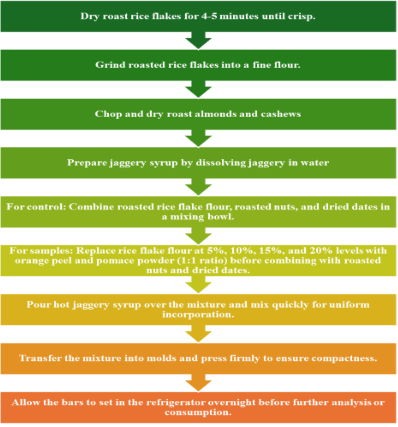
Figure 1: A Flowchart Illustrating the Preparation of Value-added Snack Bars
Sensory Evaluation of Value-added Snack Bars
Sensory evaluation is essential in ascertaining the acceptability and overall quality of food products. In the current investigation, a sensory assessment was conducted on waffles, snack bars, biscuits, and cupcakes that were formulated with varying levels of orange peel and orange pomace powder incorporation, specifically at 5, 10, 15, and 20 percent. This evaluation provided insights into consumer preferences and the impact of the incorporation of citrus by-products on product quality. Essential sensory attributes including taste, aroma, texture, appearance, and colour were meticulously examined, as these factors exert a significant influence on consumer perception and acceptance.
A panel consisting of 12 trained and semi-trained evaluators was established for the sensory evaluation. Prior to the evaluation process, the panelists were thoroughly acquainted with the evaluation methodology and scoring criteria to ensure consistency in judgment and to mitigate potential biases during the assessment. Based on the outcomes of the sensory evaluation, the formulation that attained the highest overall acceptability score was selected for further analysis, and its proximate composition, dietary fibre, and mineral content were analyzed.
Estimation of Proximate Composition, Dietary Fibre, and Mineral Content of Control and Most Acceptable Value-added Snack Bar
The proximate analysis of the selected snack bar formulation was performed utilizing standard analytical methodologies as described by AOAC (2000). The carbohydrate composition was ascertained employing the difference method, which involves subtracting the cumulative percentage of moisture, ash, protein, fat, and crude fibre from a total of 100 (Ani and Abel, 2018). The total dietary fibre was assessed utilizing the enzymatic–gravimetric technique as specified by Kumar et al. (2014). The calcium concentration was evaluated through the standard titrimetric approach as stipulated by AOAC (2000). The potassium concentration was ascertained subsequent to the acid digestion of the sample, in accordance with the methodology detailed by Allen (1989).
2.6.1 Moisture
The evaluation of moisture levels was performed by employing the standard analytical method as specified by the AOAC (2000).
Procedure: A sample weighing ten grams was precisely measured in a petri dish and subjected to drying in an oven maintained at a temperature of 105°C for a duration of six hours or until a consistent weight was achieved. The sample was subsequently weighed following its cooling in desiccators.
Moisture (%)= Loss in weight (in grams)Weight of the sample (in grams)×100
2.6.2 Crude Protein
The total nitrogen concentration was assessed using a standardized approach as outlined by AOAC (2000). The estimation of crude protein was performed employing a conversion factor of 6.25.
Reagents:
Hydrochloric acid (N/100)
Boric acid (4%)
Sodium hydroxide (40%)
Digestion mixture: 10 grams of K2SO4, 0.5 grams of CuSO4·5H2O, and 2 grams of FeSO4.
Mixed indicator solution: A solution was prepared by dissolving 0.1 grams of methyl red and 0.5 grams of bromocresol green in 100 ml of 95% ethanol, subsequently adjusting the solution to a bluish-purple hue with the addition of dilute NaOH.
Procedure: A sample weighing two hundred milligrams was subjected to digestion with 20 ml of concentrated H2SO4 along with a small quantity of the digestion mixture. The nitrogen, in the form of ammonium salt, was subsequently diluted with 40 percent NaOH within a Micro Kjeldahl apparatus. The liberated ammonia was absorbed in a 10 ml boric acid solution containing several drops of the mixed indicator and was then titrated against standard HCl (N/100). The endpoint of the titration was signified by a colour change from bluish-green to pink.
Crude Protein %=0.00014×V×(S-B)×100V1×W×F
Where,
W = Weight (g) of the sample taken
V = Volume (mL) made
V1 = Volume (mL) of aliquot taken for distillation
S = Volume (mL) of HCl (N/100) used in titration for blank
B = Volume (mL) of HCl (N/100) used in titration for blank 0.00014 = 10 mL of 0.1 N HCl neutralize 0.00014 grams of nitrogen
F = Factor for converting N to protein (6.25)
2.6.3 Crude Fat
Procedure: The quantification of crude fat was conducted in accordance with the established protocol outlined by AOAC (2000), employing the Soxhlet extraction apparatus. 5 grams of the ground sample was meticulously weighed and placed into an extraction thimble, which was subsequently covered with cotton wool. The thimble was then positioned within the Soxhlet extractor, and the fat was extracted into a pre-weighed flask over a duration of 6 hours utilizing petroleum ether (B.P. 40˚C – 60˚C). Following the extraction process, the solvent was removed through evaporation, the flask was allowed to cool within a desiccator, and its weight was recorded. The crude fat content was subsequently calculated and expressed as a percentage relative to the dry matter content of the sample.
Crude Fat %=Weight of the flask with sample-Weight of flaskWeight of dry sample×100
2.6.4 Ash Content
Procedure: The ash content of the sample was determined using the AOAC (2000). 5.0 grams of the sample was meticulously measured and subsequently placed into pre-dried crucibles. The specimens were then subjected to ashing in a muffle furnace at a temperature of 550˚C for a duration of 6 hours. The ashed specimens were allowed to cool within a desiccator until they reached ambient temperature, after which they were weighed. The ash content was calculated as:
Ash content %=Weight of crucible+Ash-Weight of crucibleWeight of sample×100
2.6.5 Crude Fibre
The measurement of crude fibre in the sample was performed using the standardized analytical protocol as specified by the Association of Official Analytical Chemists (AOAC, 2000).
Reagents:
Hydrochloric acid (%) v/v
Sulfuric acid stock solution (10% v/v): A dilution was prepared by combining 55 milliliters of concentrated sulfuric acid with 1 liter of distilled water.
Sulfuric acid working solution (1.25%): This solution was prepared by diluting 125 milliliters of the stock solution to a final volume of 1 liter.
Sodium hydroxide stock solution (10% w/v): This was achieved by dissolving 100 grams of sodium hydroxide in distilled water and adjusting the volume to 1 liter.
Sodium hydroxide working solution (1.25%): A dilution was prepared by mixing 125 milliliters of the stock solution with distilled water to a final volume of 1 liter.
Antifoam (2%): This was composed of silicone in carbon tetrachloride.
Procedure: A two-gram of fat-free dried sample was placed into a 1-liter tall beaker, to which 200 milliliters of 1.25 percent sulfuric acid and several drops of antifoam were added. The resultant solution was subjected to boiling for a duration of 30 minutes under a bulb condenser. The beaker was intermittently rotated to ensure thorough mixing of the contents and to dislodge any particles adhering to the sides. The contents were subsequently filtered into the beaker utilizing a Buchner funnel. The sample was then reintroduced into the beaker with 200 milliliters of 1.25 percent sodium hydroxide and was boiled again for precisely 30 minutes. The entire insoluble residue was transferred to a crucible (designated as G-1) using boiling distilled water until it was confirmed to be acid-free. The residue was washed twice with alcohol and thrice with acetone, followed by drying at 100 degrees Celsius until a constant weight was achieved. The dried sample was ashed in a muffle furnace at a temperature of 550 degrees Celsius for one hour. The crucible was subsequently cooled in a desiccator and weighed.
Crude fibre %=W2-W3W1×100
Where,
W1= weight (g) of the sample
W2 = weight (g) of insoluble material (weight of crucible-insoluble matter – weight of crucible)
W3 = Weight (g) of ash (crucible + ash – weight of crucible)
2.6.6Carbohydrate
The carbohydrate content was quantified employing the difference method. The cumulative percentage of moisture, ash, protein, fat, and crude fibre was deducted from 100 (Ani and Abel, 2018).
Carbohydarte %=100-(% moisture+% ash+% protein+% fat+% crude fibre)
2.6.7 Estimation of Total Dietary Fibre, Insoluble Dietary Fibre, and Soluble Dietary Fibre
The quantification of dietary fibre was conducted in accordance with the methodology outlined by Kumar et al. (2014). For the determination of dietary fibre, a sample weighing 1 g was placed in an Erlenmeyer flask, to which 25 mL of 0.1 M sodium phosphate buffer (pH 6.0) was added and mixed thoroughly. Subsequently, 100 mg of Termamyl was introduced and the mixture was incubated in a boiling water bath for a duration of 15 minutes, after which it was cooled and 20 mL of distilled water was added, followed by adjustment of the pH to 1.5 using 4 N HCl (hydrochloric acid). An additional 100 mg of pepsin was incorporated, and the mixture was incubated at 40°C with agitation for 60 minutes, after which it was cooled, 20 mL of water was added, and the pH was adjusted to 6.8 using 4 N sodium hydroxide. Following this, 100 mg of pancreatin enzyme was introduced, and the mixture was incubated at 40°C with agitation for 60 minutes, subsequently cooled, and the pH was adjusted to 4.5 with 4 N HCl. The processed sample was then filtered through dry Celite, serving as the filtration aid.
Insoluble fibre: The residue was subjected to washing with two aliquots of 10 mL of 95% alcohol and acetone, dried at 105 ± 2°C until a constant weight was achieved, and the weight of the crucibles was recorded (D1), followed by incineration at 550°C for 5 hours. After cooling, the weight of the crucibles was recorded (I1).
Soluble fibre: The volume of the filtrate was adjusted to 100 mL, followed by the addition of 400 mL of warm 95% alcohol, which was allowed to stand for 1 hour to facilitate precipitation, after which it was filtered through dried and weighed crucibles (D2), and rinsed with two aliquots of 10 mL of alcohol and acetone, subsequently dried at 105 ± 2°C overnight. The samples were incinerated at 550 ± 10°C for a duration of 5 hours, cooled, and the weights of the crucibles were recorded (I2).
Blank samples (B) for both insoluble and soluble fractions were prepared without the inclusion of the sample, adhering to the identical procedural framework.
Insoluble dietary fibre %= D1-I1-BW×100
Soluble dietary fibre %= D2-I2-BW×100
Total dietary fibre (%)=Insoluble dietary fibre+Soluble dietary fibre
Where,
W = weight of the sample
2.6.8 Calcium
The standard Titrimetric method of analysis was used to measure the amount of calcium in the sample (AOAC, 2000).
Reagents:
A saturated solution of ammonium oxalate.
A dilute solution of hydrochloric acid (1-part HCl + 4 parts water).
Methyl red indicator (0.5% in absolute alcohol).
A 0.1 N solution of potassium permanganate.
A dilute solution of ammonium hydroxide (1-part NH4OH + 1 part water).
A 10% solution of sulphuric acid.
A 0.1 N solution of oxalic acid: Sodium oxalate is subjected to drying in an oven at a temperature of 100 degrees Celsius for a duration of 12 hours. Precisely 6.7 grams is subsequently dissolved in distilled water, after which 5 ml of concentrated H2SO4 is incorporated, and the solution is adjusted to a total volume of 1L post-cooling.
Standardization of the potassium permanganate solution: A volume of 10 ml of 0.1 N oxalic acid solution is transferred into a conical flask. An addition of 1 ml of concentrated H2SO4 is made, and the mixture is heated to approximately 70 degrees Celsius before being titrated against the KMnO4 solution until a persistent faint pink hue is observed.
Procedure: A clear sample filtrate, measuring 50 ml and derived from ash, is placed into a beaker. Ten ml of saturated ammonium oxalate solution is introduced. The mixture is then boiled, followed by the addition of two drops of methyl red indicator. The solution is neutralized with dilute ammonium hydroxide and reboiled to facilitate the formation of a coarse crystalline precipitate. A few drops of dilute hydrochloric acid are incorporated until the colour is adjusted to a faint pink. The solution is permitted to stand overnight. The precipitates are subsequently filtered through Whatman filter paper and thoroughly washed with hot distilled water until they are devoid of oxalates. The precipitate along with the filter paper is returned to the original beaker and dissolved in 20 ml of 10% sulphuric acid. The contents are then heated to approximately 70 degrees Celsius and titrated against the 0.1 N potassium permanganate solution until a faint pink colour is achieved. A blank is also executed employing a similar procedure. Calculations: The volume of 1 ml of 0.1 N KMnO4 consumed corresponds to 0.002 grams of Calcium.
Calcium=ml pf 0.1N KMnO4 used ×0.002×ABWeight of sample in grams×100
2.6.9 Potassium
For the purpose of potassium mineral estimation, the sample underwent digestion in accordance with Allen’s methodology (Allen, 1989).
Preparation of the digestion mixture: 0.42 g of selenium powder was combined with 14 g of lithium sulphate monohydrate in 350 mL of hydrogen peroxide, ensuring thorough mixing. Subsequently, 420 mL of concentrated sulfuric acid (H2SO4) was introduced to this solution while it was maintained in an ice bath for cooling. The resulting mixture was preserved at a temperature of 2˚C and exhibited stability for a duration of four weeks.
Digestion method: 0.3 g of each sample was precisely weighed in digestion tubes, followed by the addition of 4.4 mL of the digestion mixture. The digestion apparatus was sustained at a controlled temperature of 360 ˚C for a period of two hours to ensure the complete digestion of the samples.
Reagents:
Potassium Standards
The stock solution (1000 ppm) was prepared by dissolving 1.9068 g of dry potassium chloride in distilled water and adjusting the final volume to 1 L.
The working standard was subsequently prepared by further diluting the stock solution to obtain concentrations of 100, 70, 50, 30, 10, and 1 ppm.
Procedure
The procedure for total potassium determination involved the utilization of the flame photometric method. Standard solutions ranging from 0 to 100 ppm were analyzed in the flame photometer employing the K filter following the requisite settings and calibration of the instrument. Post-calibration, the samples were analyzed, and the concentrations displayed on the digital screen were recorded based on the established standard curve. Following calibration, the samples were processed, and the concentrations were computed with reference to the prepared standard curve. The percentage of potassium was determined utilizing the equation.
Potassium=C (ppm)×0.125Weight of the sample
Where,
C= Corrected Concentration of sample solution (concentration of sample-concentration of blank).
2.7 Statistical Analysis
Data acquired through sensory evaluation was subjected to sensory analysis. Mean values alongside standard deviations were computed for all parameters to evaluate central tendency and variability. Statistical analysis was executed employing Microsoft Excel, and findings were articulated as mean ± standard deviation to facilitate precise interpretation of the data.
Results and Discussion
3.1Sensory Evaluation of Value-Added Snack Bars
In the present study, rice flakes flour was partially substituted with a 1:1 blend of orange peel and pomace powder at levels of 5, 10, 15, and 20 percent, while a control sample without substitution was used for comparison. The control and all experimental snack bar formulations are shown in Figure 2, highlighting the visual changes associated with increasing levels of citrus by-product incorporation.
The mean sensory scores of the developed snack bars are presented in Table 3 and illustrated in Figure 3. The control sample exhibited good acceptability, with overall acceptability scored at 7.95 ± 0.60, indicating that the base formulation was well received by the panelists. Sample 1 (5% substitution) showed sensory scores comparable to the control across all attributes, with an overall acceptability score of 7.86 ± 0.69, suggesting that low-level incorporation of orange peel and pomace powder did not adversely affect sensory quality.
Sample 2 (10% substitution) recorded comparatively lower scores for all sensory parameters, including taste (7.50 ± 0.79), texture (7.33 ± 0.88), and overall acceptability (7.56 ± 0.66). This decline may be attributed to a slight imbalance in flavor or textural changes at this level of substitution, as perceived by the panelists. However, the scores remained within the acceptable range on the nine-point Hedonic scale.
In contrast, Sample 3 (15% substitution) demonstrated improved sensory performance, with scores for taste (8.08 ± 0.51), aroma (8.00 ± 0.42), and overall acceptability (8.00 ± 0.31) slightly exceeding those of the control. This indicates that moderate incorporation of citrus by-products enhanced sensory appeal without introducing negative attributes. The highest sensory scores were observed for Sample 4 (20% substitution), which achieved an overall acceptability score of 8.25 ± 0.55. This formulation received the highest ratings for taste, appearance, aroma, and colour, highlighting its strong consumer preference.
A comparable study by Negrete (2022) explored the development of gluten-free oat-based snack bars containing varying concentrations (14%, 17%, 20%, 23%, and 26%) of orange peel derived from the Citrus sinensis (Valencia) variety. Orange peel was used in both powder and zest forms. Sensory evaluation using a 9-point hedonic scale revealed that bars containing 17% and 20% orange peel were most acceptable, with overall liking scores of 6.05 ± 1.65 and 6.04 ± 1.84, respectively. However, a decline in acceptability was observed at 23% (5.54 ± 1.74), attributed to increased bitterness from limonin, a compound present in citrus peel. Moreover, findings also showed that orange flavor became excessive at higher levels, with 48.5% of consumers rating it as “too much” at 23%, compared to 33.98% at 17%. Furthermore, a rejection tolerance threshold (RTT) analysis in the second part of study determined that overall consumer rejection began beyond 18.16% orange peel concentration. In contrast, the present study demonstrated high acceptability even at 20% incorporation, likely due to the combined use of orange pomace, which may have diluted bitterness, balanced flavor, and improved textural attributes. Overall, the results indicate that orange peel and pomace powder can be successfully incorporated into rice flake-based snack bars at levels up to 20% without compromising sensory quality. Among the formulations tested, the snack bar containing 20% substitution emerged as the most preferred, supporting its selection for further nutritional evaluation and reinforcing the potential of citrus by-products as functional ingredients in value-added snack formulations.
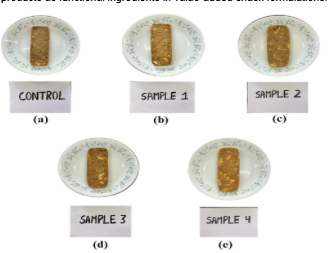
Figure 2: Value-added Snack Bars Prepared with Varying Levels of Orange Peel and Pomace Powder Substitution: (a) Control, (b) Sample 1 (5%), (c) Sample 2 (10%), (d) Sample 3 (15%), (e) Sample 4 (20%)
Table 3: Mean Sensory Scores of Snack Bars Developed with Varying Levels of Orange Peel and Pomace Powder Substitution
Sample/ Control | Taste | Appearance | Aroma | Colour | Texture | Overall Acceptability |
Control | 8±0.85 | 8.08±0.51 | 7.75±0.75 | 8.08±0.79 | 7.83±0.83 | 7.95±0.60 |
Sample 1 (5%) | 8±0.85 | 7.91±0.90 | 7.66±0.98 | 7.91±0.90 | 7.83±0.83 | 7.86±0.69 |
Sample 2 (10%) | 7.5±0.79 | 7.75±0.75 | 7.58±0.66 | 7.66±0.88 | 7.33±0.88 | 7.56±0.66 |
Sample 3 (15%) | 8.08±0.51 | 8.08±0.51 | 8±0.42 | 7.91±0.51 | 7.91±0.79 | 8±0.31 |
Sample 4 (20%) | 8.33±0.65 | 8.25±0.86 | 8.25±0.62 | 8.41±0.66 | 8±0.73 | 8.25±0.55 |
3.2Proximate Composition, Dietary Fibre, and Mineral Content of Developed Value-Added Snack Bars
The biochemical composition of the control snack bar and the snack bar substituted with 20 percent orange peel and pomace powder is presented in Table 4. Incorporation of citrus by-products resulted in marked changes in proximate composition, dietary fibre fractions, and mineral content. Moisture content decreased from 9.70 percent in the control to 7.52 percent in the substituted snack bar, indicating improved shelf stability. Protein content showed a reduction from 9.69 percent to 7.27 percent, which may be attributed to the relatively lower protein content of citrus by-products compared to rice flakes flour. In contrast, total ash content increased from 1.01 percent to 1.66 percent, reflecting enhanced mineral contribution from orange peel and pomace. Carbohydrate
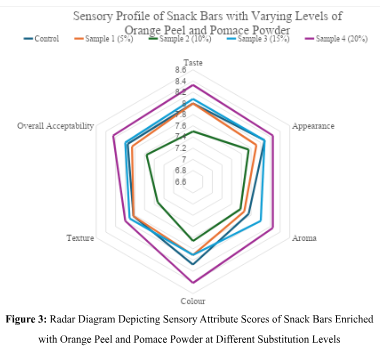
Figure 3: Radar Diagram Depicting Sensory Attribute Scores of Snack Bars Enriched with Orange Peel and Pomace Powder at Different Substitution Levels
content declined from 67.65 percent to 63.97 percent, while fat content decreased from 11.05 percent to 8.08 percent, contributing to an improved nutritional profile of the fortified snack bar.
A substantial enhancement in fibre content was observed with citrus by-product incorporation. Crude fibre increased markedly from 0.90 percent in the control to 11.50 percent in the 20 percent substituted snack bar. Similarly, total dietary fibre increased from 3.94 percent to 12.97 percent. This improvement was primarily driven by a pronounced rise in soluble dietary fibre, which increased from 0.90 percent to 10.42 percent. Insoluble dietary fibre showed a slight decrease from 3.02 percent to 2.55 percent, suggesting a shift in fibre composition toward the soluble fraction. The high soluble fibre content may be attributed to the presence of pectin and other soluble polysaccharides in orange peel and pomace.
Mineral analysis revealed a significant enhancement in micronutrient content following substitution. Potassium content increased from 84.30 mg in the control to 160 mg in the fortified snack bar, while calcium content rose from 42.10 mg to 79.97 mg. These findings highlight the mineral-rich nature of citrus by-products and their effectiveness in improving the micronutrient density of snack formulations.
The present results show both similarities and contrasts with previous studies. Blicharz-Kania et al. (2023) reported increased moisture content in cereal bars fortified with grape and apple pomace, attributed to the high water-binding capacity of apple pectin. In contrast, the reduction in moisture content observed in the present study may be related to differences in citrus fibre structure and drying efficiency of orange peel and pomace. Their reported total dietary fibre values (16.29 to 17.62 percent) are slightly higher than those observed in the present study (12.97 percent), yet they follow a comparable trend of fibre enrichment, particularly in the soluble fraction.
Similar trends were reported by Abbas et al. (2025), who investigated the incorporation of pomegranate peel powder in snack bars and observed progressive increases in crude fibre and ash content with increasing substitution levels. Their study also reported improvements in calcium and potassium content, along with reductions in protein and fat levels at higher substitution levels. These findings are consistent with the present study, where 20 percent substitution with orange peel and pomace powder resulted in elevated calcium and potassium levels alongside reduced protein and fat content. The decline in protein content across studies may be attributed to the dilution effect caused by replacing cereal-based ingredients with fruit-derived by-products.
Overall, the results demonstrate that substitution of rice flakes flour with 20 percent orange peel and pomace powder significantly improved dietary fibre and mineral content while reducing fat and moisture levels. These changes contribute to an enhanced nutritional profile without compromising sensory acceptability, supporting the use of citrus by-products as functional ingredients in value-added snack bar formulations.
Table 4: Proximate Composition, Dietary Fibre, and Mineral Content of Control and 20 Percent Orange Peel and Pomace Powder Substituted Snack Bar
S.No. | Test | Control | 20% Substituted Snack Bar |
1 | Moisture (%) | 9.70 | 7.52 |
2 | Protein (%) | 9.69 | 7.27 |
3 | Total Ash (%) | 1.01 | 1.66 |
4 | Carbohydrates (%) | 67.65 | 63.97 |
5 | Fat (%) | 11.05 | 8.08 |
6 | Crude Fibre (%) | 0.90 | 11.50 |
7 | Total Dietary Fibre (%) | 3.94 | 12.97 |
8 | Soluble Dietary Fibre (%) | 0.90 | 10.42 |
9 | Insoluble Dietary Fibre (%) | 3.02 | 2.55 |
10 | Potassium (mg) | 84.30 | 160 |
11 | Calcium (mg) |
Conclusion
The current investigation demonstrated the effective formulation of value-added snack bars through the integration of orange peel and pomace powder as functional constituents. The replacement of rice flakes flour with a 1:1 mixture of orange peel and pomace powder, particularly at the 20 percent ratio, yielded a nutritionally enhanced product while maintaining sensory acceptability. Sensory assessment revealed that the snack bar with a 20 percent substitution attained the highest aggregate acceptability ratings, underscoring positive consumer perception.
Biochemical evaluation indicated that the integration of citrus by-products resulted in a marked elevation in crude fibre, total dietary fibre, and soluble dietary fibre, along with a significant augmentation in calcium and potassium concentrations. Simultaneously, decreases in fat and moisture content facilitated an improved nutritional profile and potential shelf stability. While a marginal reduction in protein content was noted, this observation aligns with trends documented in analogous research involving the incorporation of fruit by-products.
In summary, the results affirm that orange peel and pomace powder can be adeptly employed in snack bar formulations to enhance nutritional quality while promoting the sustainable utilization of citrus processing waste. The investigation underscores the potential of citrus by-products as economically viable functional ingredients for the development of healthier snack alternatives and contributes to initiatives aimed at food waste valorization and sustainable nutritional practices.
Statements & Declarations
Authors’ Contribution: Hamita Preet Kaur conducted the experimental formulations, laboratory analysis, sensory evaluation, and primary data collection as part of her Master’s research. Dr. Uttara Singh provided the conceptual framework, supervised the nutritional evaluation, performed the technical review of the results, and finalized the manuscript for publication.
Peer Review: This article has undergone a double-blind peer-review process managed by the Editorial Board of Edumania-An International Multidisciplinary Journal. Independent experts in Food Science and Clinical Nutrition evaluated the study for methodological accuracy, nutritional significance, and its contribution to sustainable food systems.
Competing Interests: The authors declare that they have no financial, personal, or institutional conflicts of interest that could influence the results or the integrity of this research.
Funding: The authors declare that no specific grant or financial support from any funding agency in the public, commercial, or not-for-profit sectors was received for this research.
Data Availability: The experimental data, including sensory evaluation scores and nutritional composition results, are contained within the manuscript. Additional details regarding the preparation of orange peel and pomace powders are available from the corresponding author upon reasonable request.
Ethical Approval: This study follows the ethical guidelines for food research. Sensory evaluation was conducted with informed consent from a panel of semi-trained judges, ensuring safety and hygiene standards in accordance with institutional guidelines for food product testing.
License: Development and Evaluation of Value-Added Snack Bars Using Orange Peel and Pomace Powder for Sustainable Nutrition, authored by Hamita Preet Kaur and Uttara Singh, is licensed under a Creative Commons Attribution-NonCommercial-NoDerivatives 4.0 International License (CC BY-NC-ND 4.0). Published by ICERT.
References:
Shetty, P. P., Pramod, N., and Guntoju, S. (2025). Formulation of nutritious protein enriched oats bar: A functional snack for athletes’ post-training recovery. International Journal of Science and Research, 14(5). https://doi.org/10.21275/SR25506133242
Diplock, A.; Aggett, P.; Ashwell, M.; Bornet, F.; Fern, E.; Roberfroid, M. The European Commission concerted action on functional foods science in Europe (FUFOSE). Scientific concepts of functional foods in Europe. Consensus document. Br. J. Nutr. 1999, 81, 1–27.
Zahra, R. S., Fauziyah, A. I., & Ilmi, I. M. B. (2025). Sorghum Flour and Coconut Flour Snack Bars as Functional Foods for Type 2 Diabetes Mellitus. https://doi.org/10.20473/amnt.v9i2.2025.278-290
Abbas R, Aamir M, Saeed F, Shankar A, Kaur J, Nadeem R, et al. (2025) Development and nutritional evaluation of pomegranate peel enriched bars. PLoS ONE 20(1): e0315830. https://doi.org/ 10.1371/journal.pone.0315830
Barakat, H., Alfheeaid, H. A., Aljutaily, T., Alayouni, R., Alharbi, H. F., & Alsanei, W. A. (2025). Elucidating the Nutritional Profile and Biochemical Characterization of High-Energy Nutritional Bar Formulated with Sukkari Date Paste and Mixed Nuts. Foods, 14(21), 3661. https://doi.org/10.3390/foods14213661
Kausar, T., Aslam, K., Hussain, A., Arshad, R., Waqas, M.T., Bilal, M., Zia, M., Firdous, N. and Elkhedir, A.E. (2025). Development and evaluation of food bar utilizing the valuable waste in the form of apple and carrot pomace powders. Discover Food, 5(1), 1-17. https://doi.org/10.1007/s44187-025-00620-2
Benvenutti, L., Moura, F. M., Zanghelini, G., Barrera, C., Seguí, L., & Zielinski, A. A. F. (2025). An Upcycling Approach from Fruit Processing By-Products: Flour for Use in Food Products. Foods, 14(2), 153. https://doi.org/10.3390/foods14020153
Iqbal, S., Tirpanalan-Staben, Ö., & Franke, K. (2022). Modification of Dietary Fibers to Valorize the By-Products of Cereal, Fruit and Vegetable Industry—A Review on Treatment Methods. Plants, 11(24), 3466. https://doi.org/10.3390/plants11243466
Mahajan, A., Sharma, P., Goudar, G., Chandragiri, A., Gogoi, P., & Longvah, T. (2025). Exploring the nutrient profiles of fruits and vegetable by‐products for improving food system sustainability. Food Biomacromolecules, 2(3), 353-365.
Dellapina, G., Poli, G., Moscatelli, V., Magalhães, D., Vilas-Boas, A. A., & Pintado, M. (2025). Flavonoid-Rich Extracts from Lemon and Orange By-Products: Microencapsulation and Application in Functional Cookies. Foods, 14(19), 3346. https://doi.org/10.3390/foods14193346
Dikmetas, D.N., Nemli, E., Karbancioglu-Guler, F., Apak, R., Bener, M., Zhang, W., Jia, N., Zhao, C., Tomas, M. and Capanoglu, E. (2025). Lactic Acid Bacterial Culture Selection for Orange Pomace Fermentation and Its Potential Use in Functional Orange Juice. ACS omega, 10(11), pp.11038-11053. https://doi.org/10.1021/acsomega.4c09704
Hu, X., Zeng, J., Shen, F., Xia, X., Tian, X., & Wu, Z. (2022). Citrus pomace fermentation with autochthonous probiotics improves its nutrient composition and antioxidant activities. Lwt, 157, 113076. https://doi.org/10.1016/j.lwt.2022.113076
Manakas, P., Balafoutis, A. T., Kottaridi, C., & Vlysidis, A. (2025). Sustainability assessment of orange peel waste valorization pathways from juice industries. Biomass Conversion and Biorefinery, 15(5), 6525-6544. https://doi.org/10.1007/s13399-024-05626-x
Tahir, Z., Khan, M. I., Ashraf, U., Adan, I. R. D. N., & Mubarik, U. (2023). Industrial application of orange peel waste; a review.
Oduntan, A. O., & Arueya, G. L. (2019). Design, formulation, and characterization of a potential ‘whole food’using fibre rich orange (Citrus sinensis Lin) pomace as base. Bioactive Carbohydrates and Dietary Fibre, 17, 100172.
AOAC. Official methods of analysis of AOAC International, 17thed.Gaithersberg, MD: AOAC International, Washington, DC; 2000.
Ani, P. N., & Abel, H. C. (2018). Nutrient, phytochemical, and antinutrient composition of Citrus maxima fruit juice and peel extract. Food Science & Nutrition, 6(3), 653-658.
Kumar, P., Wadikar, D., & Patki, P. (2014). A Ready‐to‐Eat Antioxidant Rich Appetizer Based on Coleus aromaticus: Its Development and Shelf-Life Evaluation. Journal of Food Processing, 2014(1), 126569.
Allen, S. E. (1989). Chemical Analysis of Ecological Materials (2nd ed.). Blackwell Scientific Publications.
Muela Negrete, Andrea R., “Development and Characterization of Physicochemical Properties and Consumer Perception of Gluten-Free Oat-Based Snack Bars Containing Orange Peel” (2022). LSU Master’s Theses. 5561.
Blicharz-Kania, A., Vasiukov, K., Sagan, A., Andrejko, D., Fifowska, W., & Domin, M. (2023). Nutritional Value, Physical Properties, and Sensory Quality of Sugar-Free Cereal Bars Fortified with Grape and Apple Pomace. Applied Sciences, 13(18), 10531.
Related Articles:
- Climate To Smart Agriculture: A Pathway to Achieving SDG 2 In Rain to Fed Regions of India
- Shifting the Integrative Medicine Paradigm: Alternative Medicine-Based Constitutional Individualization Models for Developing Precision Therapeutics
- Youth Mental Health and Social Well Being
- Empowering Young Minds for a Sustainable Future: A Multidisciplinary Exploration of Innovation, Leadership and Social Responsibility in the Twenty-First Century
- Beyond Intelligence: Investigating AI’s Role in Spiritual Quotient Development